Whispers of Old Hawaii on the Owyhee River
/Whispers of Old Hawaii on the Owyhee River
I met Chris Geronimo, a fly-fishing guide and owner of Boise River Guides, at Burning Man.
Less than a month later, after following a certain hottie back to her hometown of Boise, Idaho, I found myself fishing with Chris again—this time far from the Nevada desert.
I set up a trip with Chris, his girlfriend, and the hottie, Ashley. The four of us piled into his 4Runner and made our way across the Idaho border into Oregon to fish the Owyhee River.
It would be Ashley’s first time fishing.
I’ve fished with guides before, but this was the first time I had the opportunity to watch another guide introduce a complete beginner to fly fishing from the ground up. Watching Chris teach Ashley opened my eyes to his world as a guide. He took someone who had never touched a fly rod and patiently showed her how to cast, manage the line, set the hook, and eventually bring a fish to hand.
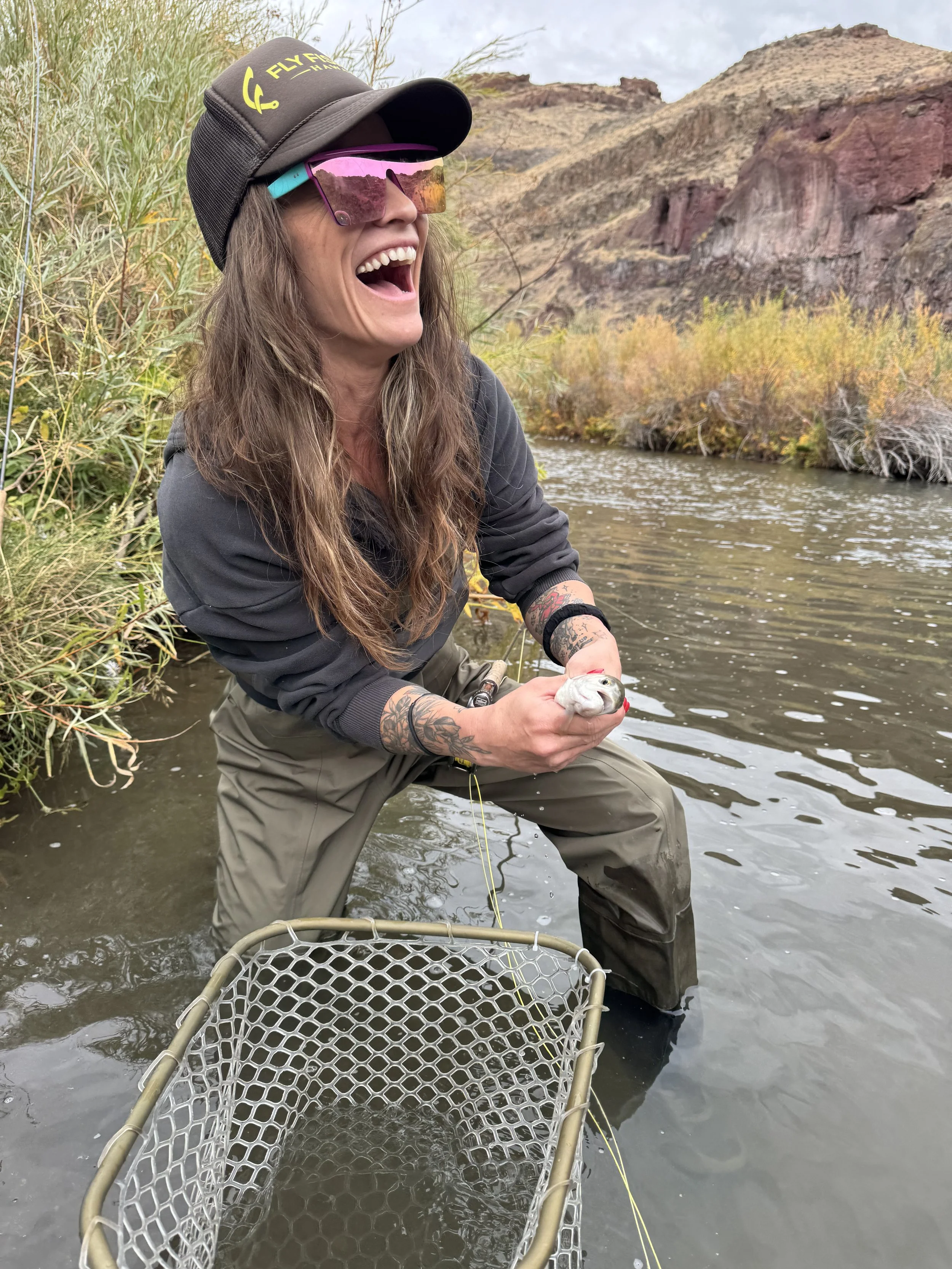
By the end of the day, she had gone from never holding a fly rod to catching her first trout.
And somewhere in the middle of it all, I realized I was learning too.
From the Playa to the Owyhee
There was something fitting about meeting Chris at Burning Man.
For one week each year, tens of thousands of people gather on the dry lakebed of Nevada’s Black Rock Desert and create a temporary city in a place that once sat beneath the waters of ancient Lake Lahontan.
Lake Lahontan is also the namesake of the Lahontan cutthroat trout, a fish deeply connected to the waters of Nevada and the Great Basin.
What was once lake and fishing ground is now desert—a place where, by complete chance, two fly-fishing guides from different parts of the world met: one from Idaho and one from Hawaii.
Then, a few weeks later, we found ourselves together on a river whose name carries its own connection to Hawaii.
The Owyhee River’s name comes from an older spelling of “Hawaii.” In the early 1800s, Native Hawaiians were often referred to as “Owyhees” in the Pacific Northwest. The river was named in connection with Hawaiian members of the fur trade who traveled into this region during the era of western exploration.
That history immediately caught my attention.
I’m from Hawaii.
And suddenly, standing beside a river in Oregon, thousands of miles from home, I found pieces of Hawaiian history woven into the landscape around me.
The early 1800s were a period of enormous change for Hawaiians. Kamehameha the Great had united the Hawaiian Islands after years of warfare between chiefs, establishing the Kingdom of Hawaii. After his death in 1819, Hawaii entered another dramatic period of change, including the dismantling of the traditional kapu system that had governed Hawaiian society for generations.
At the same time, Hawaiians were traveling farther and farther beyond the islands.
Some joined trading ships. Others worked as sailors, laborers, hunters, and fur trappers. They crossed the Pacific and found themselves scattered throughout the western edges of North America, helping explore and build places far removed from the islands they came from.
Their presence left a mark.
Throughout the Pacific Northwest, traces of those Hawaiian travelers remain in place names, stories, landmarks, and communities.
For me, that made fishing the Owyhee feel like more than simply fishing another river.
It felt like stepping into a small piece of history.
Setting Expectations
As we drove toward the river, Chris began doing something every good guide understands: setting expectations.
It doesn’t matter whether you’re chasing bonefish in Hawaii or trout in Oregon. Setting expectations is one of the most important things a guide can do.
Chris asked Ashley a simple question.
“What do you want or expect today?”
She had never fly-fished before, so she didn’t exactly know what to expect. Chris explained the game plan: first she would learn the basics, then she would take those skills to the river and hopefully catch a fish.
He had already asked me a similar question.
My answer was pretty simple.
I wanted to see the ladies catch fish.
And if there happened to be some carp around, I wouldn’t mind getting a shot at one of those either.
We found a campground below the dam with a grassy area that gave us plenty of room to practice casting and rehearse the mechanics of fighting a fish before stepping into the river.
Chris laid out a simple plan built around everyone in the group.
We would start with casting lessons for the ladies, take a quick look for carp, move to a couple of trout spots, and eventually return to the campground where Chris and I could take another shot at the carp before finishing the day with a picnic beside the river.
I’m pretty sure he added some of that carp fishing specifically for me.
From what I’ve seen, not many people around Idaho seem particularly interested in targeting carp on a fly rod.
I am.
The Value of Watching
Chris told me I could go ahead and look for carp while he gave Ashley and his girlfriend their casting lesson.
Instead, I watched.
I’ve caught carp before, but I had never really had the chance to stand back and watch another professional guide teach a complete beginner.
That opportunity was worth more to me than making a few casts.
One of the best pieces of advice I can give anyone learning to fish is simple:
Learn through observation.
Throughout my fishing life, I’ve spent plenty of time holding the fish bag before I was ever allowed to actually fish.
When I learned to throw net in Hawaii, for example, I followed my teacher for months. I listened. I watched. I helped gather the net after every throw.
Throw-net fishing in Hawaii can put you in some sketchy places. Sometimes you need fins and a mask just to retrieve the net.
For months, I followed along without touching it.
During that time, though, I was learning everything.
I learned where the fish hid.
I learned how to approach them.
I learned how the net was gathered.
I learned how the fisherman positioned himself and how he read the water.
Then one day, I was finally handed the net.
By that point, I had already spent months learning without realizing how much information I had absorbed.
I had earned my chance to throw.
That experience shaped the way I approach fishing.
Sometimes the best way to learn isn't by asking a hundred questions. Sometimes you simply watch someone who knows what they’re doing and pay attention to how they make it happen.
So that’s what I did with Chris.
Watching a Guide Work
I stood back as Chris carefully explained the basic mechanics of fly casting—feeding line, stripping line, controlling the rod, and understanding where the cast begins and ends.
He was detailed without overwhelming the student.
That is harder than it sounds.
He also had a natural ability to read the room. He would explain something technically, then throw in a joke or quick comment that kept everyone relaxed and engaged.
There were even moments where I caught myself questioning what I was hearing.
Most fly fishermen learn the classic idea of moving the rod between roughly ten o’clock and two o’clock.
Chris threw in a changeup.
Ten to one.
That caught my attention.
I stopped being someone standing around waiting to fish and became a student myself.
More importantly, I watched the way he adjusted his teaching to the person standing in front of him.
That is what good guiding is.
You can know everything there is to know about fishing, but if you cannot communicate that knowledge to the person beside you, it doesn't mean much.
As the lesson continued, you could see everything beginning to click.
Ashley went from never having held a fly rod to making casts in less than ten minutes.
She was ready for the river.
The First Fish
For someone completely new to fly fishing, trout can be a wonderful introduction.
The casting does not always need to be complicated. You don't necessarily need long casts, double hauls, or the kind of wind management we deal with while chasing bonefish in Hawaii.
In Hawaii, starting your fly-fishing career in the salt while chasing bonefish can require an enormous amount of patience, determination, and frustration tolerance.
On the Owyhee, Ashley could focus on the fundamentals.
Chris guided her through a simple roll cast upstream.
The indicator drifted.
Then it disappeared.
Fish on.
Within minutes of beginning, Ashley had her first bite.
The fish came off.
Then came another bite.
She missed the hook set.
Another cast.
Another drift.
Another chance.
With Chris coaching her through the process, she finally connected.
Ashley landed her first trout.
Mission accomplished.
Except apparently it wasn't.
She caught another.
Then another.
The person who had arrived that morning without any real expectation of becoming a fisherman was suddenly hooked.
Eventually, it was time to move on.
That was when Chris and I heard Ashley say the words every fisherman knows.
“One more cast.”
I smiled.
There it was.
That is the moment the guide hooks the fisherman.
Three simple words that carry a surprising amount of weight.
One more cast.
She had gone from having no expectations at all to not wanting to stop.
Anyone who loves fishing can probably remember some version of that moment.
The first fish.
The first bite.
The first day where something suddenly clicks and you realize you want to do it again.
A fishing monster had come to life.
When the Guide Becomes the Student
Fishing has a strange way of bending time.
Hours become minutes.
Minutes become seconds.
Suddenly the sun is lower, the day is nearly finished, and you’re wondering where all the time went.
That September day on the Owyhee left an indelible mark on me.
I began the day hoping to catch some carp and watch the ladies catch trout.
Instead, I found myself watching another guide work and remembering one of the oldest lessons fishing has ever taught me:
Pay attention.
Observe.
Stay curious.
You never know who might teach you something.
There was something beautifully circular about the entire experience.
Two fishing guides met by chance in the middle of a Nevada desert that was once an ancient lake.
One came from Idaho.
One came from Hawaii.
Weeks later, we stood together along an Oregon river whose name carries the memory of Hawaiians who traveled across the Pacific more than two centuries before us.
A woman who had never touched a fly rod became a fisherman.
And a guide became a student.
For a few hours that September day, the whispers of old Hawaii came alive again on the Owyhee River.
And all it took was one more cast.