The Alaska Experience with No Salmon

What is fishing in Alaska without salmon?

In June 2023, I was invited on a fishing trip to Alaska by my good friends Andy and Bobby, two cousins I had guided for bonefish in Hawaii. It was my first trip to Alaska and my first opportunity to experience guided fishing from the other side. For five days, we fished hard, but there were no salmon—not at the river mouth, not at Brooks Falls, and not anywhere else we went. That didn't stop us from having fun.

The Journey North

I packed my things and flew from Honolulu to Anchorage and then to King Salmon. Andy, Jenny, Bobby, and Dutch arrived around the same time. We jumped into a van and stopped for snacks and booze. I thought Hawaii was expensive until I saw a handle of Crown Royal selling for nearly $100. Supply and demand, I suppose. When you're far from everything and supplies are limited, prices go up.

We drove about five miles along a freshly graded gravel road toward our lodge. Justin, our driver, told us about a recent grizzly bear encounter there. A bear had broken into the kitchen and lingered around the property, raising serious safety concerns. The bear was eventually shot and killed. When I asked Justin how that encounter had gone, his answer was short: “Not very good.”

Mosquito Country

From the moment we arrived, we were attacked by giant mosquitoes. When the frozen tundra thaws, the mosquitoes come out in force. They seemed to attack anything that moved—and anything that didn't. Trucks, rocks, houses, people: if it was warm, they wanted a bite. I swear you could clap your hands with your eyes closed and kill five hundred of them.

The weather was surprisingly mild and sunny. We didn't need winter jackets or gloves. But the mosquitoes made up for that comfort. Welcome to Alaska.

Life at the Lodge

The lodge had a kitchen, dining area, and rooms upstairs and downstairs. The guides slept in a separate building. Bobby and I shared a small, dark room with two single beds and a nightstand. A lamp cast a weak glow that seemed to disappear into the walls and carpet. A small window let in some light, and one wall slanted down over our pillows.

Every evening, we ate with the family who owned the lodge and discussed the next day's plan. Every day we hoped to find salmon. Every day we made do with what we had instead.

Brooks Falls Without Salmon

Never heard of Brooks Falls, but when it was described to me, I recalled seeing it on National Geographic. You know the place where grizzlies catch salmon as they leaped upstream.   An iconic place that has been filmed and photted millions of times.   If you saw Alaska, Salmon and Bears on TV, you were probably looking at Brooks Falls. 

When we got to the falls, there were no salmon and no bears feeding there. We switched it up and fished for trout instead. Nearby were cabins, a visitor center, and National Park Service personnel. If I remember correctly, there were a few “hotties” of the opposite sex working there, including an exotic redhead.   Of all the things I remember, no salmon, no bears and “hotties.”  Let’s not forget the floating rocks.  The shoreline was covered with Pumice-rocks that float like pieces of wood on the water.

After fishing, we made the two-and-a-half-hour boat ride back to the lodge. It was a long ride, but the scenery was spectacular. Floatplanes landed on the water around us, and the Alaskan wilderness seemed to go on forever.

We kept returning to the lodge, eating dinner, and making a new plan. Maybe tomorrow the salmon would show up. Maybe tomorrow we'd see the bears catching them. Tomorrow kept coming, but the salmon didn't.

My First Freshwater Fly-Fishing

I knew how to sight-fish for bonefish in Hawaii. I was used to spotting a fish, studying its movements, and making a precise cast. Blind casting into freshwater was a completely different experience. At first, we hooked only a few trout after countless casts. I caught my first freshwater trout on a fly rod near Brooks Falls, which was exciting, but I kept trying to spot fish before casting to them. They weren't easy to see.

On a separate day, we decided to target Dolly Vardan, and found ourselves at the mouth of a small river in the middle of no-where.  The plan was to head up stream to a known location for the targeted fish.  We stopped the boat, I made a cast, and hooked a trout. Then another. And another. It didn't seem to matter what we threw. Spoons and flies were hammered almost as soon as they hit the water. Nearly every cast produced a fish, many around twenty inches long or more. We weren't even trying anymore. Fish seemed to be landing at our feet. It was wild!

Into Bear Country

After about an hour, we headed upriver so Dutch, Andy's son, could try to catch a Dolly Varden, a fish he had never caught. We parked the boat and hiked roughly a mile into the wilderness. There wasn't another person in sight.

We walked single file, with Cameron, our lead guide, in front and Justin behind us. Both carried bear spray. I had seen bears from a distance, but I had never been this close to grizzly country. I was used to watching for sharks while spearfishing. On land, I had a whole new predator to worry about.

We were in the bears' territory, possibly among the first visitors they had seen since waking from their winter slumber. I imagined a hungry bear coming out of hibernation and meeting a group of fishermen on the trail. Naturally, I asked a lot of questions.

Then it happened. Two enormous grizzly bears stood in the river, looking for salmon. They were the biggest bears I had ever seen. We were close to two of North America's most dangerous animals without a cage or fence between us. Everyone became very quiet.

The bears saw us, turned, and walked the other way. Within moments, they disappeared into the brush. We were all a little shaken, and I had a new appreciation for just how wild Alaska really was.

An Epic Day on the River

We reached the fishing spot, and Dutch caught his Dolly Varden. On the way back, we returned to the trout water and caught a ton of fish. We stopped for lunch, and I even caught a suckerfish with my bare hands while eating a sandwich. A Golden Eagle flew overhead. True story—we have it all on video. It was an epic day on the river with great friends.

Pike Fishing

We also discovered how much fun pike fishing could be. I used a spinning rod with a surface frog, while Bobby stuck with the fly rod. The pike attacked from every direction, sometimes striking the instant the lure hit the water. We hooked some enormous fish.

Because we hired a guide, I asked our guide to hold the pike while snapping a photo of both of us.  We kept fishing until it seemed every pike in that cove had attacked our lures and had figured out what was happening. Watching those aggressive predators explode on a surface lure reminded me how much I love seeing the fish before it eats.

A Question for Andy

On the way back from one incredible day of trout fishing, I asked Andy, “Do I need to fly-fish in freshwater ever again?”

I was serious. The fish were big, plentiful, and biting everything. What more could I accomplish? Andy replied, “No, you will never get another day like that.”

Perfect! I was stoked. I could cross trout fishing off my list. I had experienced what seemed like the highest level of trout fishing, and I didn't need to do it again.

Why I Love Sight-Fishing

Even though the fishing was excellent, trout fishing didn't excite me the way sight-fishing does. It's a little like golf: I'll go if my friends are going and we can socialize and laugh, but I wouldn't go play by myself.

Casting a fly into water where I can't see the fish just isn't the same. Cast a fly, let it drift, and a fish bites. Then release it and repeat. If we were sight-fishing for those trout, that would be different.

For me, the excitement is spotting a fish, studying its behavior, making the cast, and watching it eat. That's why I love bonefish, and why when I fish in fresh water I’m excited to target carp. Carp like bonefish require skill and patience.  It takes skill to Catch bonefish, it takes skill to catch carp.  The challenge is what makes it so exciting.

Years have passed, and I still have no desire to target trout again.  I approach trout fishing like I approach golf, I'll happily join friends, laugh, socialize, and cheer them on. Sometimes watching a beginner hook their first fish equivalent to a nice golf shot and both enjoyable to watch. That's one of the things I love about guiding.

Heading Home

Eventually, our Alaska trip came to an end without a single salmon. Andy, Jenny, and Dutch had a layover in Anchorage before heading to Truckee. Bobby returned to the East Coast with memories of catching everything but salmon.

My flights home also took me through Anchorage, followed by what seemed like every city along the West Coast. With a couple of hours layover, and without a heads up I called an old classmate from the Naval Academy. Without hesitation, he picked me up at the airport about five minutes later, drove me to his house, and loaded me up with salmon from his freezer.

I may not have caught a salmon, but I got lucky. I took about forty pounds of processed, frozen salmon fillets back to Hawaii. After five days of fishing without salmon, I was finally bringing some home.

And then came the final irony of the whole adventure.

The salmon arrived the day we left.

Five days of fishing, enormous trout, aggressive pike, Dolly Varden, grizzly bears, endless mosquitoes, and unforgettable moments with friends—but not a single salmon caught by our group. Looking back, I wouldn't change a thing. The fishing was only part of the adventure. The wilderness, laughter, friendship, and stories were what made it memorable.

We went to Alaska looking for salmon and came home with something better: memories we'll be talking about for years. And thanks to an old friend, I even came home with forty pounds of salmon. Not bad for a fishing trip without salmon.
Finding Healing Through Fly Fishing

By Makani Christensen

October 6, 2026

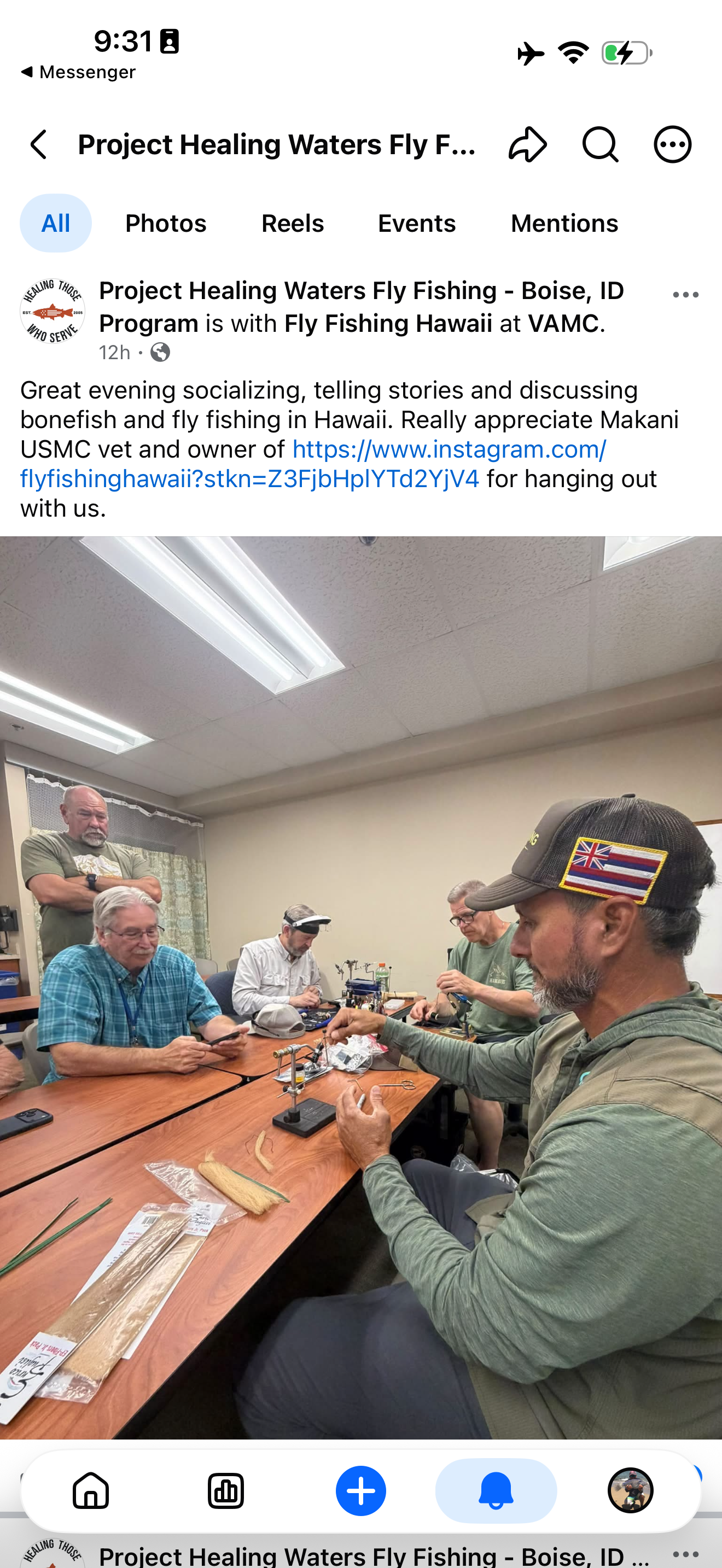
I recently visited Boise, Idaho, where I met Chris, a fellow veteran and the Pacific Northwest coordinator for Project Healing Waters.

Established in 2005, Project Healing Waters helps veterans cope with emotional and physical wounds through the therapeutic experience of fly fishing. Whether standing in a stream, casting on the flats, or floating in a boat in the middle of the ocean, veterans have an opportunity to remain active, reconnect with nature, and redirect their energy toward something positive.

The organization brings veterans together through shared experiences, creating opportunities for healing, friendship, and understanding. It allows them to step away from the trauma of war and the challenges of everyday life, replacing those burdens, even if only for a moment, with peace, purpose, and happiness.

Chris and I discussed organizing an informal gathering of veterans in the Boise area to talk about fly fishing in Hawaii. We wanted to create a safe and welcoming space where veterans could share their experiences, learn about Hawaiian culture, and discover the healing opportunities that fly fishing can provide.

I also wanted to share my own story and invite fellow fly fishermen to Hawaii. Many of the people I fish with are veterans themselves, and I have seen firsthand how fly fishing helps us cope with the lingering trauma of war.

When Chris brought everyone together, I felt honored to speak to my brothers and sisters in arms.

I made a few wrong turns before finally turning into the parking lot of the VA facility. I arrived early and waited in my truck, using the quiet time to gather my thoughts. I jotted down a few notes and outlined the points I wanted to cover: the introduction, the body, and the conclusion. Once everything was organized, I felt ready.

Soon, more people began arriving. I introduced myself to each person as they entered the parking lot, and together we made our way inside.

What began as an informal meeting quickly became something much more meaningful. Perhaps we would make new friends. Perhaps, when I returned, we would have something to share. Whatever happened, I knew there was a reason for being there.

We entered the facility and gathered in a classroom. Approximately thirty chairs were arranged throughout the room, with a podium at the front and a dry-erase board beside it.

The room was well equipped, and everything we needed was there.

Chris introduced me to the group gathered on one side of the room. Looking around, I realized I was probably the youngest veteran there, at forty-six. Another veteran’s daughter appeared to be about my age.

At forty-six, more than twenty years after fighting my war, I wasn’t sure whether anyone could relate to my experiences.

Some of the men were Vietnam veterans. Others had served in Iraq, Afghanistan, or during another conflict. We came from different generations and carried different memories, but we shared similar backgrounds and experiences. Somehow, despite those differences, we found ourselves standing on familiar ground.

It felt safe to say that few of us had escaped the lasting effects of war.

If you fought in combat and returned home, your life was forever changed. If you missed the action, perhaps you were among the fortunate ones who could sleep peacefully at night, without the memories that refuse to fade.

Regardless of our backgrounds, we had all volunteered to serve our country and protect our way of life.

The freedoms we enjoy are not free. Blood has been shed protecting the ideals that govern our great nation.

“We the People” are the opening words of the Constitution, reminding us of the principles we once swore to defend.

As I stood before that group, I had the honor of speaking to men and women who understood the meaning of service, sacrifice, and the responsibilities that come with both.

I knew I needed to read the room and understand my audience.

That part was easy.

The challenge was delivering my message.

Fortunately, I had already structured what I wanted to say, writing down the main points just minutes before the first truck entered the parking lot.

Every good talk begins with an introduction. I wanted to keep mine simple by answering the five W’s: who, what, where, when, and why.

The first four were easy to explain.

The fifth—why—was the reason we had all come together.

Why do we fish?

Why does standing in a river or casting across the ocean bring us peace?

Why do so many veterans find comfort in something as simple as a fly rod, a stretch of water, and the hope of a fish?

I shared examples of how fly fishing has helped us stay sober, choose a different path, and find purpose when life seemed overwhelming.

I spoke about the anger that can consume us, the rage sometimes drowned in alcohol or other substances, both legal and illegal, and the temptation to numb the pain rather than confront it.

For many veterans, these struggles are real.

Yet when you learn to clear your mind and focus on the water, something begins to change. You stop dwelling on your problems and become present. That is where the connection happens.

We shared a common past, and now we fish to heal.

I explained how many of us veterans in Hawaii fly fish together. We share stories, encourage one another, and find strength in the friendships we have built.

I described the opportunities to fish in Hawaii and the importance of introducing fellow veterans to the experience.

I also explained how fly fishing can be different for each of us. Some find peace in the solitude of the water. Others find it in the companionship of friends who understand what they have endured.

I spoke for a while, covering many topics and subtopics related to fly fishing in saltwater. The conversation flowed so naturally that it seemed only minutes had passed.

Then I looked around the room and realized I had been speaking for nearly two hours, answering questions and tying flies.

The audience remained engaged. My fellow veterans asked thoughtful questions, and each answer led to another conversation rooted in personal fishing experiences.

One question stood out:

“Why are the flies so heavy?”

The answer was simple, but it opened the door to a deeper discussion about our unique fishing conditions in Hawaii.

Before I knew it, there was even more to share.

Knowledge is power, and it can make the difference between catching fish and going home without one.

Learning from fellow fly fishermen, sharing experiences, and helping others understand the fundamentals of fishing are all part of becoming successful.

And the learning never ends.

There is always something new to discover.

Sometimes, that discovery begins with something as small as a fishing fly. As you put all the pieces of the puzzle together, you begin to see the bigger picture.

You start hooking fish.

You begin to understand the water.

You gain confidence in your abilities.

Somewhere along the way, without even realizing it, you may begin to heal.

That is what we shared that day.

Be curious.

Be willing to listen.

Be excited to learn something you have never done before.

Sometimes, the greatest lessons in life come from the simplest experiences. A fly rod does not erase the past, and the water does not ask us to forget it. Instead, it gives us a place to carry what we have lived through without carrying it alone.

Among veterans, a cast can become an invitation. One person teaches another. A story is shared. A quiet moment becomes a reminder that service may have ended, but the bond between those who served can continue.

Then the line lifts from the surface, the rod bends, and the water opens in front of us. For that moment, there is no need to explain where we have been or what we have lost. We stand together, watching the current and ready for whatever comes next.

Changing the Game! Hawaiian Bonefish

Setting the Example

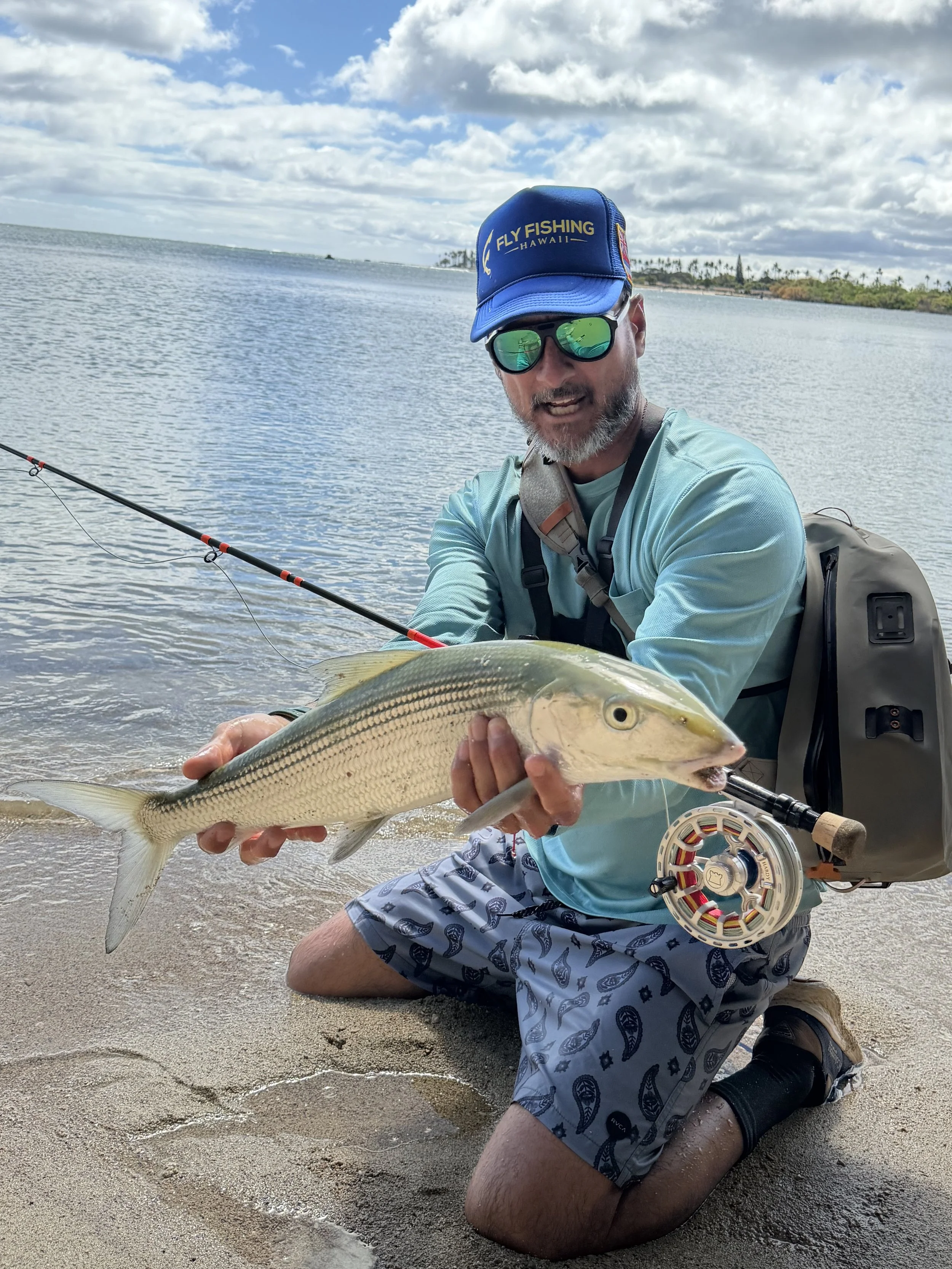
Experienced Hawaiian fly-fishing guides and anglers who have fished in different parts of the world agree that the bonefish in Hawaii are different. They don’t behave like the bonefish found in other destinations. They don’t readily bite, they spook easily, and they grow exceptionally large.

I can only base this on the stories I’ve heard from anglers who have fished with me. They talk about fishing in Belize and catching dozens of small bonefish with ease. Each angler describes these as “different fish” after struggling to catch a single Hawaiian bonefish.

Some have spent tens of thousands of dollars chasing bonefish in remote parts of the world, only to arrive in Hawaii and find themselves struggling to catch even one of our giants.

For the most part, Hawaii hasn’t been a destination that anglers readily travel to specifically for bonefish. We’ve done our fair share of marketing to put Hawaiian bonefish on the map, yet Hawaii is still being discovered as a world-class bonefishing destination.

Through our daily Instagram posts, YouTube videos, and multiple IGFA world-record bonefish catches, we’ve helped bring attention to Hawaii and attract anglers from around the world.

Being part of this journey has been an incredible experience.

It feels as though we’re changing the way people catch bonefish and setting an example for the rest of the world. We’ve created bonefish flies specifically for Hawaii, challenged established myths, and changed the equipment we use.

We’ve gotten rid of extra tackle and returned to the fundamentals, minimizing what we carry and focusing on what we truly need to catch giant Hawaiian bonefish.

Imagine that.

After all these years, we’ve accomplished things on the fly that no one else has ever done. That says a lot about how far we’ve come, and we’re still changing things.

Heavier flies, heavier leaders, bright-colored clothing, sunscreen-coated flies, double goldens, and stronger hooks are just a few of the new concepts and developments we’ve introduced.

We’ve even reached the point of developing a fly rod specifically for the fish here in Hawaii.

Keeping it simple, making it stronger, and creating three different 8-weight rods that satisfy individual casting preferences have become the foundation of this project.

Over the years, I’ve personally purchased just about every kind of fly rod imaginable. I’ve broken almost every one.  There have been a few rods that cast exceptionally well and were strong, but for the most part, advancements in rod technology have often resulted in rods becoming lighter, thinner, and more fragile.

One nick on a rod can turn a once perfect 4-piece  rod into a five-piece rod.

So, is technology really worth it when we’re chasing giant bonefish with increasingly fragile equipment?

We rush to purchase the newest, most technologically advanced fly rods, hoping they’ll improve our casting. Yet sometimes those advancements seem to come at the expense of strength and durability.

When fly-fishing for bonefish, I believe in keeping things simple and making sure your equipment is dependable at all times.

As anglers, we need to trust our equipment.

Understanding the strength of the drag on your reel, the breaking strength of your fly line, the connections between your backing, leader, hook, and fly rod is essential. You need to know how much pressure you can put on a fish and how far you can push your equipment before reaching its breaking point.

Your equipment should become an extension of you.

When everything works together, everything flows. It’s a synergistic connection that develops when every element is dialed in.

We fish for giant bonefish almost every day, and we’ve learned what it takes to be successful on the flats.

When it came time to develop our own fly rods, we teamed up with Sacred Rods, a Hawaii-based company, to create three different fly rods that are durable and exceptionally well suited to our demanding fishing environment.

Our goal was to develop the perfect fly rod for Hawaiian bonefish.

We wanted to bring all the essential elements together: the reel seat, the eyes, the carbon-fiber blank, the thread, the ceramic eyes and the epoxy. Every component was carefully considered to create a rod capable of handling giant Hawaiian bonefish.

To accomplish this, three combat veterans, professional fly fishermen, and fly tiers from Hawaii helped design three different 8-weight fly rods suited to their individual casting styles.

Each rod was designed with a different balance of action, flexibility, and performance. All three feature top-of-the-line stainless-steel guides, high-quality carbon-fiber blanks, cork grips, and smooth reel seats.

Makani Christensen (me), Joe Marks, and Elias Espiritu (Kurupt Hawaiian on Instagram) are friends and fishing partners who created our own unique Hawaiian bonefish flies.

We fish together and share a common bond: war.

We’re all combat veterans, and fly-fishing has helped each of us better manage the personal struggles and lasting effects of our experiences in combat.

We share stories, support one another, and fish together simply to enjoy life.

We can relate to one another because we’ve all been there.

Our bond runs deeper than a couple of buddies going fishing. It comes from our shared combat experiences, the struggles we’ve faced, and the understanding that develops between people who have lived through similar circumstances.

Our conversations are deep, and our understanding of one another goes far beyond the water.

The struggles didn’t end when we returned to Hawaii and became civilians again. Life after the military brought its own challenges, including learning how to live, how to cope, and sometimes simply how to survive.

Being able to recognize depression in one another, acknowledge when someone is struggling, and give that person the attention and support they need has made a difference in our lives.

Rather than brushing things aside, pretending everything is fine, or telling someone to simply be a man and get over it, we’ve learned to listen and support one another.

We’ve all struggled.

We’ve all faced moments when life seemed overwhelming.

Yet through our friendship, we’ve been able to turn our lives around, become better fathers, strengthen our relationships, and work toward eliminating destructive behaviors and addictions.

We’ve all danced on the edge of death, but we’ve chosen life.

We are friends. We fish together. And together, we’ve created something unique—something born in Hawaii and designed specifically for Hawaii.

Our flies and our fly rods are made for Hawaiian waters, for giant and powerful bonefish, and for our individual styles of casting and fishing.

Now, three professional fly tiers, fly fishermen, friends, and combat veterans have come together to produce three distinct fly rods.

These rods represent more than fishing equipment.

They represent years of experience, lessons learned on the flats, a willingness to challenge conventional thinking, and the pursuit of something better.

They also represent friendship, perseverance, and the understanding that strength isn’t simply about how much pressure something can withstand before it breaks.

Sometimes strength is about knowing your limits, trusting the people around you, and having the courage to keep moving forward.

We’ve spent years learning how to catch giant Hawaiian bonefish. Now we’re creating the equipment we believe is worthy of them.

Whispers of Old Hawaii on the Owyhee River

Whispers of Old Hawaii on the Owyhee River

I met Chris Geronimo, a fly-fishing guide and owner of Boise River Guides, at Burning Man.

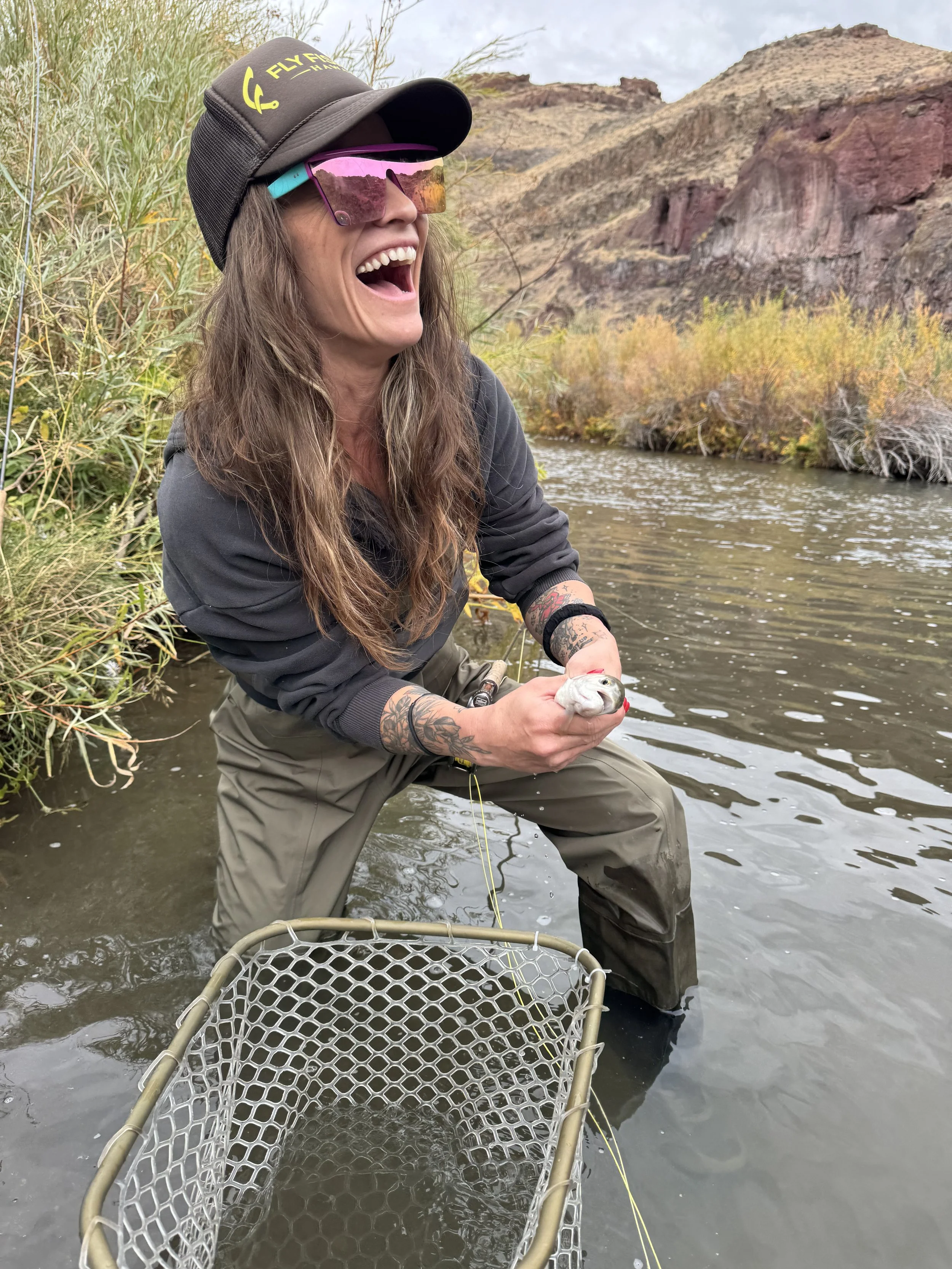
Less than a month later, after following a certain hottie back to her hometown of Boise, Idaho, I found myself fishing with Chris again—this time far from the Nevada desert.

I set up a trip with Chris, his girlfriend, and the hottie, Ashley. The four of us piled into his 4Runner and made our way across the Idaho border into Oregon to fish the Owyhee River.

It would be Ashley’s first time fishing.

I’ve fished with guides before, but this was the first time I had the opportunity to watch another guide introduce a complete beginner to fly fishing from the ground up. Watching Chris teach Ashley opened my eyes to his world as a guide. He took someone who had never touched a fly rod and patiently showed her how to cast, manage the line, set the hook, and eventually bring a fish to hand.

By the end of the day, she had gone from never holding a fly rod to catching her first trout.

And somewhere in the middle of it all, I realized I was learning too.

From the Playa to the Owyhee

There was something fitting about meeting Chris at Burning Man.

For one week each year, tens of thousands of people gather on the dry lakebed of Nevada’s Black Rock Desert and create a temporary city in a place that once sat beneath the waters of ancient Lake Lahontan.

Lake Lahontan is also the namesake of the Lahontan cutthroat trout, a fish deeply connected to the waters of Nevada and the Great Basin.

What was once lake and fishing ground is now desert—a place where, by complete chance, two fly-fishing guides from different parts of the world met: one from Idaho and one from Hawaii.

Then, a few weeks later, we found ourselves together on a river whose name carries its own connection to Hawaii.

The Owyhee River’s name comes from an older spelling of “Hawaii.” In the early 1800s, Native Hawaiians were often referred to as “Owyhees” in the Pacific Northwest. The river was named in connection with Hawaiian members of the fur trade who traveled into this region during the era of western exploration.

That history immediately caught my attention.

I’m from Hawaii.

And suddenly, standing beside a river in Oregon, thousands of miles from home, I found pieces of Hawaiian history woven into the landscape around me.

The early 1800s were a period of enormous change for Hawaiians. Kamehameha the Great had united the Hawaiian Islands after years of warfare between chiefs, establishing the Kingdom of Hawaii. After his death in 1819, Hawaii entered another dramatic period of change, including the dismantling of the traditional kapu system that had governed Hawaiian society for generations.

At the same time, Hawaiians were traveling farther and farther beyond the islands.

Some joined trading ships. Others worked as sailors, laborers, hunters, and fur trappers. They crossed the Pacific and found themselves scattered throughout the western edges of North America, helping explore and build places far removed from the islands they came from.

Their presence left a mark.

Throughout the Pacific Northwest, traces of those Hawaiian travelers remain in place names, stories, landmarks, and communities.

For me, that made fishing the Owyhee feel like more than simply fishing another river.

It felt like stepping into a small piece of history.

Setting Expectations

As we drove toward the river, Chris began doing something every good guide understands: setting expectations.

It doesn’t matter whether you’re chasing bonefish in Hawaii or trout in Oregon. Setting expectations is one of the most important things a guide can do.

Chris asked Ashley a simple question.

“What do you want or expect today?”

She had never fly-fished before, so she didn’t exactly know what to expect. Chris explained the game plan: first she would learn the basics, then she would take those skills to the river and hopefully catch a fish.

He had already asked me a similar question.

My answer was pretty simple.

I wanted to see the ladies catch fish.

And if there happened to be some carp around, I wouldn’t mind getting a shot at one of those either.

We found a campground below the dam with a grassy area that gave us plenty of room to practice casting and rehearse the mechanics of fighting a fish before stepping into the river.

Chris laid out a simple plan built around everyone in the group.

We would start with casting lessons for the ladies, take a quick look for carp, move to a couple of trout spots, and eventually return to the campground where Chris and I could take another shot at the carp before finishing the day with a picnic beside the river.

I’m pretty sure he added some of that carp fishing specifically for me.

From what I’ve seen, not many people around Idaho seem particularly interested in targeting carp on a fly rod.

I am.

The Value of Watching

Chris told me I could go ahead and look for carp while he gave Ashley and his girlfriend their casting lesson.

Instead, I watched.

I’ve caught carp before, but I had never really had the chance to stand back and watch another professional guide teach a complete beginner.

That opportunity was worth more to me than making a few casts.

One of the best pieces of advice I can give anyone learning to fish is simple:

Learn through observation.

Throughout my fishing life, I’ve spent plenty of time holding the fish bag before I was ever allowed to actually fish.

When I learned to throw net in Hawaii, for example, I followed my teacher for months. I listened. I watched. I helped gather the net after every throw.

Throw-net fishing in Hawaii can put you in some sketchy places. Sometimes you need fins and a mask just to retrieve the net.

For months, I followed along without touching it.

During that time, though, I was learning everything.

I learned where the fish hid.

I learned how to approach them.

I learned how the net was gathered.

I learned how the fisherman positioned himself and how he read the water.

Then one day, I was finally handed the net.

By that point, I had already spent months learning without realizing how much information I had absorbed.

I had earned my chance to throw.

That experience shaped the way I approach fishing.

Sometimes the best way to learn isn't by asking a hundred questions. Sometimes you simply watch someone who knows what they’re doing and pay attention to how they make it happen.

So that’s what I did with Chris.

Watching a Guide Work

I stood back as Chris carefully explained the basic mechanics of fly casting—feeding line, stripping line, controlling the rod, and understanding where the cast begins and ends.

He was detailed without overwhelming the student.

That is harder than it sounds.

He also had a natural ability to read the room. He would explain something technically, then throw in a joke or quick comment that kept everyone relaxed and engaged.

There were even moments where I caught myself questioning what I was hearing.

Most fly fishermen learn the classic idea of moving the rod between roughly ten o’clock and two o’clock.

Chris threw in a changeup.

Ten to one.

That caught my attention.

I stopped being someone standing around waiting to fish and became a student myself.

More importantly, I watched the way he adjusted his teaching to the person standing in front of him.

That is what good guiding is.

You can know everything there is to know about fishing, but if you cannot communicate that knowledge to the person beside you, it doesn't mean much.

As the lesson continued, you could see everything beginning to click.

Ashley went from never having held a fly rod to making casts in less than ten minutes.

She was ready for the river.

The First Fish

For someone completely new to fly fishing, trout can be a wonderful introduction.

The casting does not always need to be complicated. You don't necessarily need long casts, double hauls, or the kind of wind management we deal with while chasing bonefish in Hawaii.

In Hawaii, starting your fly-fishing career in the salt while chasing bonefish can require an enormous amount of patience, determination, and frustration tolerance.

On the Owyhee, Ashley could focus on the fundamentals.

Chris guided her through a simple roll cast upstream.

The indicator drifted.

Then it disappeared.

Fish on.

Within minutes of beginning, Ashley had her first bite.

The fish came off.

Then came another bite.

She missed the hook set.

Another cast.

Another drift.

Another chance.

With Chris coaching her through the process, she finally connected.

Ashley landed her first trout.

Mission accomplished.

Except apparently it wasn't.

She caught another.

Then another.

The person who had arrived that morning without any real expectation of becoming a fisherman was suddenly hooked.

Eventually, it was time to move on.

That was when Chris and I heard Ashley say the words every fisherman knows.

“One more cast.”

I smiled.

There it was.

That is the moment the guide hooks the fisherman.

Three simple words that carry a surprising amount of weight.

One more cast.

She had gone from having no expectations at all to not wanting to stop.

Anyone who loves fishing can probably remember some version of that moment.

The first fish.

The first bite.

The first day where something suddenly clicks and you realize you want to do it again.

A fishing monster had come to life.

When the Guide Becomes the Student

Fishing has a strange way of bending time.

Hours become minutes.

Minutes become seconds.

Suddenly the sun is lower, the day is nearly finished, and you’re wondering where all the time went.

That September day on the Owyhee left an indelible mark on me.

I began the day hoping to catch some carp and watch the ladies catch trout.

Instead, I found myself watching another guide work and remembering one of the oldest lessons fishing has ever taught me:

Pay attention.

Observe.

Stay curious.

You never know who might teach you something.

There was something beautifully circular about the entire experience.

Two fishing guides met by chance in the middle of a Nevada desert that was once an ancient lake.

One came from Idaho.

One came from Hawaii.

Weeks later, we stood together along an Oregon river whose name carries the memory of Hawaiians who traveled across the Pacific more than two centuries before us.

A woman who had never touched a fly rod became a fisherman.

And a guide became a student.

For a few hours that September day, the whispers of old Hawaii came alive again on the Owyhee River.

And all it took was one more cast.

Afraid of the Reef?

Fly fishing for Bonefish in Hawaii has its own challenges to include getting wrapped around the reef or going over the edge.   I’ve had countless bonefish wrap the reef, and after losing a lot of fish because of the reef monster, I’ve developed a way to land the fish even when you think all hope is lost.  It is fairly simple, slack the line, and get to the snag as fast as possible.   Moving fast is key to success! Yes you might have to run.   The longer the line stays on the reef the more time it has to rub and snap your line.   

Also important is the strength of your leader.  My leader is 12 foot in length.  It is comprised of three section of floral carbon connected by double surgeon knots.   The formula for the leader is as follows:

  • 5 Foot at 40 lb test

  • 4 Foot at 30 lb test

  • 3 Foot at 25 lb testThe first section is connected to the main fly line using a perfection loop in a loop to loop connection.   Stay away from nail knots.  When you catch a bonefish the tension on the nail knot will strip the outer coating leaving you fishless.   Trust me it’s not worth the headache especially if you are on the water trying to fix your fly line.  If your premade loop to your fly line is missing just tie a perfection loop on the main fly line, or add the premade loop knots to the fly line.   The premade loop knots.   The key is to stay away from nail knots.    Check your backing to fly line connection as well.   Make sure it is a loop to loop connection. I’ve had clients lose their entire fly line.  

The second section is 4 foot at 30lb tied with a double surgeons knot.  Then tied to the final section with a double surgeons knot of 3 foot at 25 lb test.  A double surgeons knot is super easy to tie and fast.   The uni knot works as well and looks cleaner, but the double surgeon is just as strong and way way easier to tie.   I’m over 40 and my eye sight isn’t what is use to be.   I can tie a double surgeon without looking at it.  The fly is tied to the 25lb test tippet using a perfection loop.   The total length equals 12 foot.   

Prior to tying my own leader,  I used the pre-tappered leader by scientific Angler.   Usually tapering down to somewhere around 15 lb test.   It wasn’t until I started to fish with the late Ed Tamai that  started to tie my own leaders.   We started to fish together often, and over the years I learned a lot from Ed.  He taught me the formula I fish with today.   He was very generous with his knowledge and always kept things simple.  He often fished with broken reels where the drag didn’t work, or a rod he bought at Bass Pro on his mainland trip for $30 dollars.  As if the fish were not challenging enough to catch, he always made it harder and tested the limits of fly rods and reels.  Some of his set ups were on the edge of breaking or already broken, just to add a little flare to landing these fish.   Proving if not to us to himself that he could do it.   Mastering the fishery.  He made it look easy.    

He developed his own technique with the hooks he used.   Often he would use size 6 or 8 TEMPCO hooks and he smashed down the barbs.  He always needed an extra challenge.   He bent the hook near the eye to give the hook a little more area for the fish to be hooked.  

Ed Tamai was a great friend and legendary guide on the flats.   He was known as the “Fish whisperer.”  Many times we would all be fishing, and Ed was the only guy catching fish.   On one particular trip he and I were separated by 20 yards.   We were on Rat Island on the Diamond head side near the edge walking toward the ocean.  He hugged the ledge and I stayed in line with him.   He hooked 7 bonefish in less than 30 minutes, and  I hooked 0.  Ed was that good.   

I asked Ed, “what is the sacret catching Oio (bonefish)”?  

His response was in classic Ed form.   

“Ok. Ok.  You know how you pick mangos. You look at the mango tree.  You see the green one, ah that one not ready.  You see the super ripe one, too ripe shitty.   Then you see the one.   The perfect mango ready to eat.  That’s the one you pick.  Just like catching bonefish.”

Ed always had a way of making you understand a complex problem.  Bonefish arn’t mango’s, but the idea of understanding what bonefish would eat versus a bonefish that didn’t that was the key.   The ripe mango versus the green mango.   You wanted the perfect mango or the bonefish that you knew was hungry ready to take the fly.   It took years before I finally saw it and got better at identifying the small movement the bonefish would make.   The way it swam, and the way the bonefish reacted to the flies.   A lot of small things that added up to the perfect mango.   

If you had the privilege of fishing with this legend, you may have rode to the flats on his yellow boat, nicknamed the Yellow Bus.  Hands down the best guide and most experienced fly fisherman in the state at the time.  He taught all of us something.   Now passing on the leader formula with the world.   He is also known for his fly called the ET Mantis.  Unfortunately in July of 2024 he passed away due to cancer.   His legacy lives on through the knowledge we pass to the next group of fishermen.  I’ll miss our off island trips, parties, fishing and golfing with the boys.  Ed always kept it real and a true friend to so many.

Over the years I’ve increased the strength of the leader because of the places I fished.  Over time I realized that the diameter of the leader doesn't really matter as long as the fly is presented properly.   Having a strong leader gives you more time to free the line from the reef or obstruction.  The extra strength is the difference between landing a fish and not landing a fish.  Remember to slack the line if you see the fish swim to the rocks.   Keep this in mind the next time you are fishing.

Battling the Elements while Fly Fishing

Battling the Elements while Fly Fishing

The weather is a factor when catching bonefish in Hawaii. For the most part the trade winds keep the clouds at bay, but there are those days that you won’t be able to see anything.

Read More

Best Island for Bonefishing in Hawaii

Best Island for Bonefishing in Hawaii

What is the best island to fly fish for bonefish? The top three island to fish for bonefish are Maui, Molokai, and Oahu. Check out google maps to find the location of your next fishing adventure.

Read More