The Art of Presenting a fly while Bonefishing-clouds
/Understanding Cloud Cover: How Clouds Affect Sight Fishing
Cloud cover plays an important role in sight fishing. Understanding how clouds affect sunlight, glare, and underwater visibility can make the difference between spotting a bonefish and never knowing it was there.
Many anglers assume that clear blue skies provide the best visibility. While sunshine helps illuminate the ocean floor, the type of cloud cover and its position in the sky can dramatically influence what you see beneath the surface.
White Clouds vs. Dark Clouds
Imagine a beautiful day with blue skies and scattered white clouds. The sun is shining, and visibility is excellent. Suddenly, you look toward a bright white cloud, and your ability to see into the water disappears.
White clouds reflect and scatter sunlight, creating glare on the water’s surface. Depending on your viewing angle, this reflection can make spotting fish nearly impossible, even under otherwise ideal conditions.
Dark clouds behave differently. They produce little to no reflected glare, allowing anglers to see into the water more clearly when looking in their direction. Although dark clouds may reduce the sunlight illuminating the ocean floor, the absence of glare can make fish easier to distinguish.
The key is understanding the relationship between underwater illumination and surface reflection. Bright sunlight helps reveal fish, but excessive glare can obscure them. Sometimes, the clearest view into the water is toward a dark cloud rather than a bright blue sky.
How Hawaii’s Mountains Influence Cloud Cover
Hawaii’s mountainous terrain has a significant influence on cloud formation and rainfall.
When moisture-filled trade winds encounter the mountains, the air is forced upward. As it rises, it cools, causing moisture to condense into clouds and often produce rain. This process helps explain why the windward sides of the Hawaiian Islands are generally greener and wetter than the leeward sides.
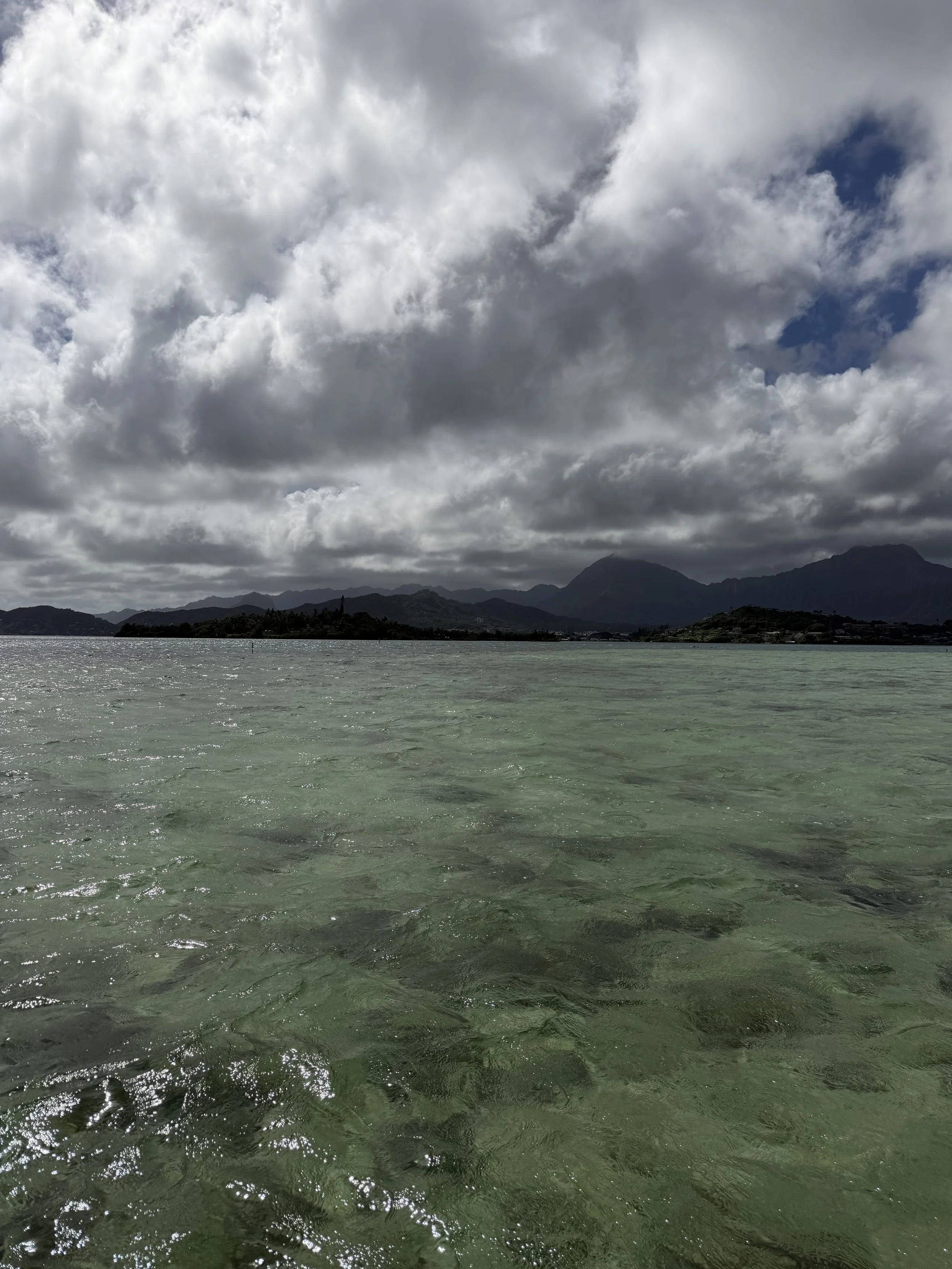
Kāneʻohe Bay, on the windward side of Oʻahu, is an excellent example.
When fishing the bay, we regularly observe clouds moving with the northeasterly trade winds toward the Koʻolau Mountain Range. These mountains are the remnants of an ancient volcano, extending approximately thirty miles along eastern Oʻahu, with peaks rising thousands of feet above sea level.
As moisture-laden air rises along the mountains, clouds thicken and frequently produce rainfall. Much of this precipitation falls on the windward side, contributing to its lush vegetation.
Clouds can also gather along the ridgelines, creating changing patterns of sunlight and shade across the surrounding waters. Recognizing these patterns helps anglers anticipate visibility changes throughout the day.
Understanding Different Cloud Levels
Clouds form at different elevations, and their thickness and composition determine how they affect sunlight.
Low-level clouds, such as stratus and cumulus, can block sunlight, cast shadows, or create bright reflections on the water. Mid-level clouds produce similar effects depending on their density.
High-level clouds, including cirrus, consist primarily of ice crystals and often appear thin and wispy. They generally allow more sunlight to pass through, although thicker formations can reduce illumination.
For sight fishing, cloud height matters less than how much light reaches the water and how much glare reflects toward the angler.
Reading the Sky While Fishing
One of the most overlooked aspects of sight fishing is paying attention to the sky.
Anglers naturally focus on the water, searching for movement, shadows, or subtle changes in color that might reveal a fish. However, clouds are constantly moving, altering the amount and direction of light across the flats.
An area offering excellent visibility can become difficult to see into within minutes.
This is why I encourage anglers to regularly look around in every direction. Pay attention to the position of the sun, wind direction, and approaching clouds.
Sometimes, simply turning your body or changing your viewing angle reveals fish that were previously hidden by glare.
Imagine stalking a bonefish across a shallow flat. You can clearly distinguish its movement against the bottom when a bright white cloud enters your field of view. Suddenly, the reflection obscures the fish.
The fish hasn’t disappeared. Only your ability to see it has changed.
Rather than casting blindly, consider waiting for the glare to pass or repositioning yourself to regain visibility.
Learning to anticipate these changes allows you to make better decisions before losing sight of your target.
Using Cloud Cover to Your Advantage
Cloud cover provides valuable information beyond visibility. Changes in cloud formations, wind patterns, and atmospheric conditions can indicate approaching weather.
For example, an incoming low-pressure system may bring increasing cloud cover, stronger winds, and thunderstorms. Recognizing these developments can help anglers plan their fishing trips and make safer decisions on the water.
However, cloudy conditions do not automatically mean poor fishing.
Water depth, bottom composition, surface disturbance, sun angle, and cloud thickness all influence underwater visibility. A darker cloud may eliminate glare, but if it blocks too much sunlight, fish can become difficult to distinguish in deeper water.
Likewise, bright sunshine can provide excellent visibility when surface reflections are minimal.
Understanding these variables allows anglers to adjust their position, choose favorable viewing directions, and take advantage of changing conditions.
Experience Makes the Difference
Sight fishing requires more than accurate casting and the ability to recognize a bonefish. It demands an understanding of the surrounding environment.
Tides rise and fall, winds shift, and clouds move across the sky. Each variable influences how effectively you can locate fish.
Experienced anglers learn to recognize these changes and adjust accordingly. This knowledge is especially valuable on Hawaii’s flats, where challenging conditions can make spotting bonefish difficult even for seasoned fishermen.
Learning to read the sky is another skill developed through time on the water.
A sunny day does not guarantee excellent visibility, just as a cloudy day does not necessarily mean poor conditions.
Sometimes, the best view into the water is found in the direction of a dark cloud, where the absence of glare reveals what bright reflections would otherwise conceal.
Successful sight fishing requires more than watching the water. Learn to read the sky, understand how clouds influence visibility, and recognize that the clearest view isn’t always in the brightest direction.