
The Art of Presenting the Fly while Bonefishing-Angle of the Sun
/Understanding the Sun: How Sun Angle Affects Sight-Fishing for Hawaiian Bonefish
One of the most important factors in sight-fishing for Hawaiian bonefish is understanding the sun. The angle at which sunlight strikes the water determines how much light penetrates the surface, how much reflects toward your eyes, and how clearly you can see fish swimming along the bottom.
The sun’s position changes throughout the day and throughout the year. These changes have a significant impact on your ability to spot bonefish. A flat that provides excellent visibility at one time of day may become extremely difficult to fish just a few hours later. Likewise, an area that offers ideal sight-fishing conditions during summer may be considerably more challenging during winter.
Understanding how the sun travels across the sky allows you to anticipate these changes and plan your fishing accordingly.
How Sunlight Enters the Water
As the sun rises in the morning, its rays strike the water at a relatively shallow angle. When sunlight reaches the surface, some of it reflects back into the atmosphere while the remainder penetrates the water.
The amount of reflection depends partly on the angle at which sunlight strikes the surface.
When the sun is low on the horizon, sunlight hits the water at a shallow angle, creating stronger surface reflections. This can make it difficult to see beneath the water, particularly when looking toward the sun.
As the sun climbs higher, its rays strike the surface more directly. A greater proportion of the incoming light can penetrate the water, illuminating the bottom and making fish easier to distinguish from their surroundings.
This is especially important when fishing for bonefish because their natural coloration allows them to blend into the bottom.
Sunlight illuminates the fish and the surrounding environment. The light reflected from the fish must then travel back through the water’s surface before reaching your eyes. Your viewing angle, surface glare, and the direction of the sunlight all influence how clearly you can see the fish.
The important point is that the angle of the sun affects both how the fish is illuminated and how much glare interferes with your ability to see it.
Early Morning: The Challenges of a Low Sun
At sunrise, the sun sits near the horizon. Its rays travel across the water at a shallow angle, often creating significant glare.
Although there may be enough daylight to begin fishing, that doesn’t necessarily mean there is enough favorable light to see bonefish clearly.
When the sun is low, the water’s surface can act almost like a mirror. Reflections may obscure fish swimming just beneath the surface or along the bottom.
The direction you’re looking becomes particularly important.
Looking toward the rising sun can make spotting bonefish extremely difficult. However, turning around and looking away from the sun may improve visibility considerably.
Even then, the low sun angle can create uneven illumination across the flats.
A bonefish swimming in one direction may be visible because sunlight reflects off its back or sides. When the fish turns, that reflection changes, and the fish may suddenly disappear against the bottom.
This is one reason early-morning sight-fishing can be challenging, even when the water is clear and calm.
Midmorning: Improving Visibility
As the morning progresses, the sun climbs higher in the sky. Its rays strike the water more directly, reducing the proportion of light reflected at the surface and allowing more sunlight to illuminate the bottom.
This often creates a noticeable improvement in visibility.
Fish that were difficult to distinguish shortly after sunrise may become much easier to see a few hours later.
During the summer months in Hawaii, sunrise occurs relatively early, around 5:45 to 6:00 a.m., depending on the date and island.
By approximately 8:00 a.m., the sun has climbed considerably higher, often providing better conditions for spotting bonefish.
This is why I frequently consider the sun’s position when deciding what time to arrive at a flat.
There is little advantage to arriving extremely early if the purpose of the trip is sight-fishing and the lighting makes it difficult to see fish.
Of course, tides and feeding patterns also matter. Sometimes an early start is necessary because the water conditions are most favorable at that time.
However, when I have the flexibility to choose, I prefer to begin fishing when the sun has reached an angle that provides sufficient visibility.
The goal isn’t simply to be on the water as early as possible. It’s to be there when I have the best opportunity to see fish.
Late Morning and Midday: Higher Sun Angles
As the sun approaches its highest point in the sky, sunlight strikes the water at a steeper angle.
Under clear conditions, this generally allows more light to penetrate the surface, illuminating the bottom and improving underwater visibility.
For sight-fishing, a higher sun can provide a considerable advantage.
You may be able to distinguish the outlines of bonefish, identify their shadows, and recognize subtle movements that would have been nearly impossible to detect earlier in the morning.
However, a high sun doesn’t eliminate every visibility problem.
Surface glare can still occur, particularly when wind creates ripples or when you are looking across the water at an unfavorable angle.
The position of the sun relative to your body also matters. Ideally, you want the sun behind you or off to one side, allowing you to look into the water without staring directly into reflected sunlight.
Even with favorable overhead lighting, your ability to see fish depends on where you stand and the direction you’re looking.
Afternoon: The Sun Begins to Drop
After reaching its highest point, the sun gradually descends toward the western horizon.
As it drops, the angle at which sunlight strikes the water becomes increasingly shallow.
The conditions that helped illuminate the bottom during late morning and midday begin to change.
Surface reflections become more pronounced at certain viewing angles, and the contrast between bonefish and their surroundings may decrease.
A flat that was easy to sight-fish at noon may become challenging by late afternoon.
This doesn’t mean bonefish are no longer present. It simply means they may be harder to see.
As the sun continues dropping toward the horizon, your viewing direction becomes increasingly important. Looking west into the afternoon sun can create considerable glare, while looking east with the sun behind you may provide a clearer view.
Understanding this daily progression allows you to adjust your position or move to another section of the flats as lighting conditions change.
How the Sun’s Angle Changes Throughout the Year
The sun doesn’t follow the same path across the Hawaiian sky every day.
Its position changes throughout the year because Earth’s axis is tilted as the planet orbits the sun.
During summer, the Northern Hemisphere tilts toward the sun. The sun rises farther north of east, travels along a higher path across the sky, and sets farther north of west.
During winter, the opposite occurs. The sun rises farther south of east, follows a lower path across the sky, and sets farther south of west.
These seasonal changes have a direct effect on sight-fishing conditions in Hawaii.
Summer: Higher Sun and Longer Days
During summer, the sun climbs much higher in the Hawaiian sky than it does during winter.
Around the summer solstice, the midday sun can be nearly overhead. In parts of Hawaii, it even passes directly overhead on certain dates.
This high sun angle can provide excellent underwater illumination, particularly when the sky is clear and the water is calm.
The higher sun also means that favorable sight-fishing light may develop earlier in the morning and remain available later in the afternoon.
For example, during summer, I may begin seeing fish effectively around 8:00 a.m., depending on the conditions.
As the sun continues rising, visibility often improves.
Longer daylight hours provide additional flexibility when planning a trip. You have more time to take advantage of favorable lighting before the sun drops toward the horizon.
Winter: Lower Sun and Shorter Days
During winter, the sun follows a considerably lower path across the southern sky.
Even at midday, the sun doesn’t climb nearly as high as it does during summer.
This lower angle changes the way sunlight strikes the water throughout the entire day.
There may be more glare when looking in certain directions, and the bottom may receive less direct illumination than it would under comparable summer conditions.
As a result, sight-fishing can become more difficult.
During winter, I may prefer to begin fishing later in the morning, allowing the sun to climb higher before searching for bonefish.
An area that provides excellent visibility at 8:00 a.m. during summer may not offer comparable lighting until later in the morning during winter.
Because the sun remains lower, some flats may never receive the same overhead illumination they experience during summer.
This is an important consideration when deciding which flats to fish during different seasons.
Why Bonefish Appear and Disappear as the Sun Changes
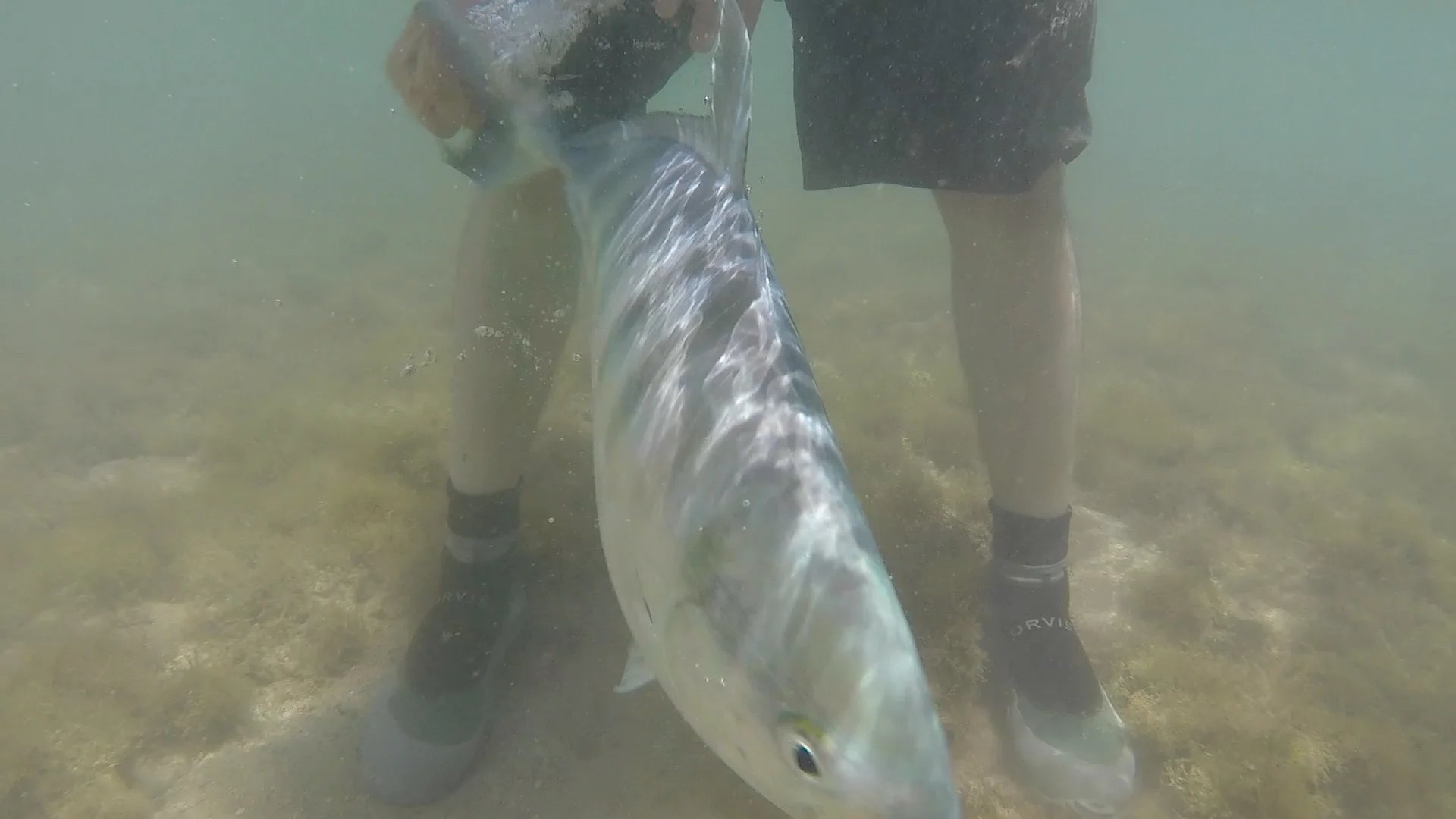
One of the most interesting things about sight-fishing is watching how a bonefish’s appearance changes with the angle of sunlight.
Imagine standing on a flat with the sun relatively low in the sky.
You spot a bonefish swimming toward you. Its greenish-gray back contrasts with the surrounding bottom, allowing you to follow its movement.
As the fish turns sideways, the angle at which sunlight strikes its body changes.
Suddenly, its back is no longer visible. You may see a brief silver flash as sunlight reflects off its side.
Then the fish turns again, and the reflection disappears.
For a moment, the fish seems to vanish.
Nothing has happened to the fish itself. The angle of the light and the portion of its body visible to you have changed.
This effect can be particularly noticeable when bonefish are swimming over mixed bottoms containing sand, algae, coral, and darker patches.
A fish may be easy to see against one section of bottom and almost invisible against another.
When sunlight strikes its back at a favorable angle, the greenish coloration may stand out. As the fish changes direction, its silvery sides may reflect the surrounding light and blend into the bottom.
This is one reason bonefish have earned the nickname “gray ghost.”
Their ability to disappear isn’t always the result of swimming into deeper water or moving away from the angler. Sometimes, a slight turn is enough to change the way light reflects from their bodies.
Understanding this phenomenon helps explain why you can clearly see a fish one moment and lose sight of it the next.
Planning Your Fishing Around the Sun
Over time, I’ve learned that the sun’s position should be considered when planning a sight-fishing trip.
The same flat can offer very different visibility depending on the time of day and season.
A location that fishes well during the morning may become difficult in the afternoon because of glare. Another flat may be challenging early in the day but provide excellent visibility once the sun moves higher.
The seasonal movement of the sun adds another consideration.
During summer, the higher sun may allow you to see fish earlier in the morning. During winter, the lower sun may require a later start or a different viewing direction.
I generally consider three questions when evaluating the sun:
1. How high will the sun be when I begin fishing? A higher sun generally provides better underwater illumination.
2. Where will the sun be in relation to the direction I’ll be looking? Having the sun behind me or off to one side can reduce glare and improve visibility.
3. How will the sun’s position change while I’m on the flats? A location that provides good visibility in the morning may become difficult as the sun moves across the sky.
These considerations help determine when to arrive, where to stand, and which direction to search for fish.
They also explain why experienced anglers sometimes begin fishing several hours after sunrise rather than heading out at first light.
Learning to Read the Sun
Understanding the sun is a skill that develops through observation and experience.
The more time you spend on the flats, the more you begin to recognize how sunlight affects your ability to see bonefish.
You notice that certain areas become easier to fish as the sun climbs. You recognize when glare begins interfering with your vision. You learn that a fish visible from one direction may be nearly impossible to see from another.
Eventually, you begin anticipating these changes rather than reacting to them.
The sun’s angle changes constantly throughout the day and gradually throughout the year. Those changes influence how sunlight enters the water, how the bottom is illuminated, and how bonefish appear against their surroundings.
The fish may be there all along. The difference is whether the angle of the sun allows you to see them.
For anyone serious about sight-fishing for Hawaiian bonefish, learning to understand the sun is just as important as learning how to cast.
Because before you can present a fly to a bonefish, you first have to see it.