
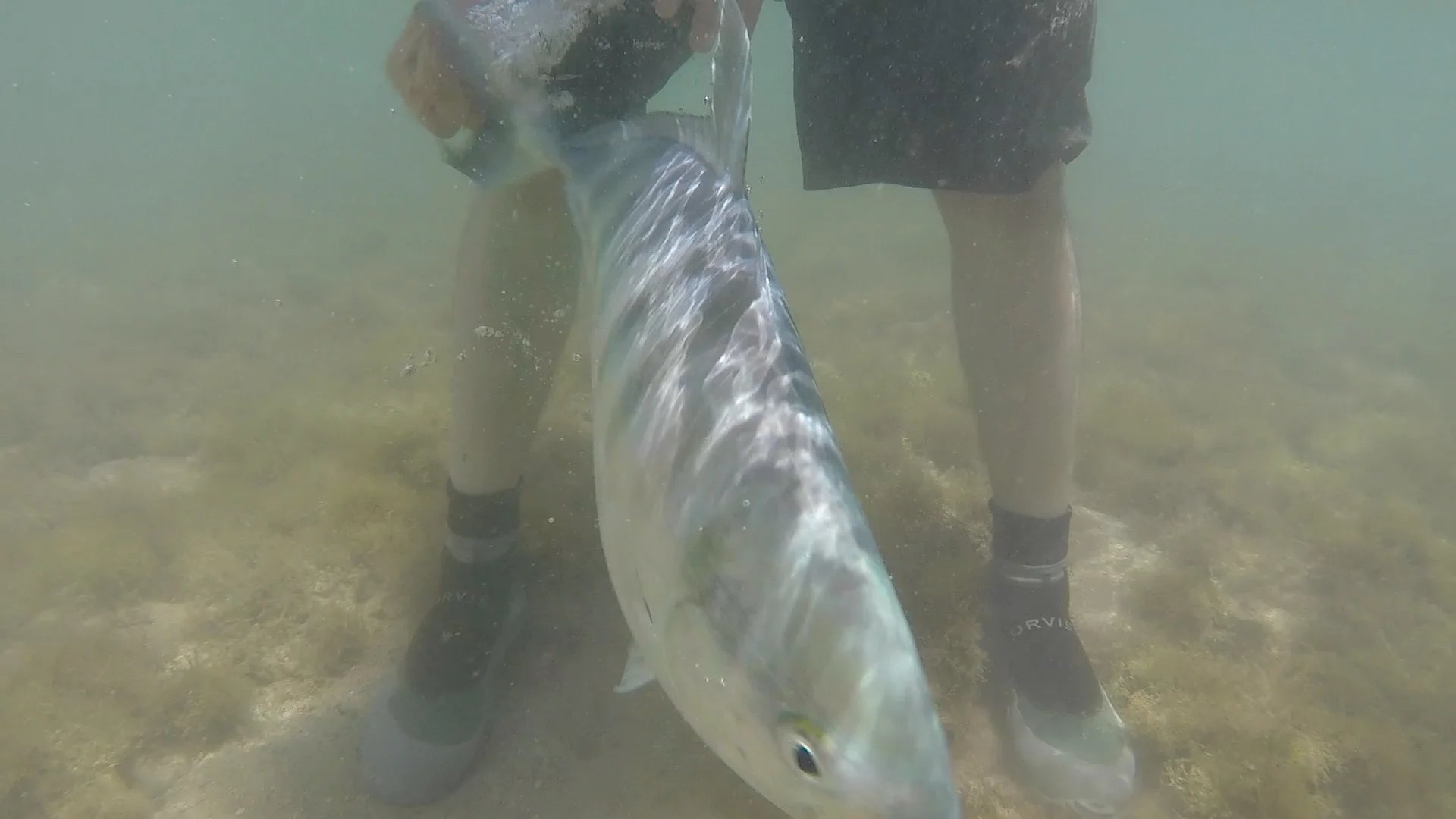
The Art of Presenting a Fly While Bonefishing-Waves and current
/By Makani Christensen
Waves and Current
Understanding Waves, Currents, and How They Affect Your Presentation
When you think about fly fishing the flats for bonefish, you probably don't spend much time considering how waves and currents affect your fly. Most anglers focus on finding fish, making an accurate cast, and choosing the right fly. However, understanding how water moves across the flats is just as important.
Waves, currents, tides, and water depth all influence how your fly behaves once it enters the water. These conditions can determine whether your fly reaches the bottom, drifts naturally, or gets swept away before a bonefish ever has a chance to see it.
Many of our flats are exposed to waves, currents, and changing tides. Sometimes, these conditions make presenting a fly extremely challenging.
I've often joked that Hawaii is one of the few places where you can get tossed around and practically barreled by waves while trying to catch bonefish.
Learning to understand these conditions, rather than only fishing in perfect conditions can make a tremendous difference in your success.
Understanding How Waves Move Your Fly
Waves create movement in the water, even when they aren't particularly large. As waves approach shallow water, they begin to interact with the ocean floor. Depending on their size, the water depth, and the surrounding bottom structure, they can generate currents that move your fly in unexpected directions.
A fly that lands exactly where you intended may not stay there. It can be lifted off the bottom, pushed toward you, carried sideways, or swept past the fish before you have time to react.
Waves can also stir up sand, sediment, and other material from the ocean floor, temporarily reducing visibility. This can make it difficult to see both your fly and the fish you're trying to catch.
The important thing to understand is that the movement you see on the surface doesn't always tell you exactly what's happening beneath it.
You need to watch how the water behaves, where the waves break, and how the current moves across the flat.
The better you understand that movement, the more effectively you can position and retrieve your fly.
A Lesson Learned on Maui's East Side
I remember fishing along the east side of Maui with another guide, Johan. The flats were extremely deep, so we had to wait for fish to move closer to shore.
After about two hours, I finally spotted two bonefish heading in from deeper water.
The tide was rising, and waves were breaking along the shoreline. They weren't particularly large, but they were powerful enough to move my fly.
I made my first cast and thought my presentation was perfect. Unfortunately, the approaching wave pushed my fly directly toward me.
I quickly adjusted, made another cast, and stripped faster to compensate for the moving water.
Had I not made that adjustment, the fly would have moved out of position before the fish could reach it.
This time, everything came together. The bonefish approached, picked up the fly, and I hooked it.
That small adjustment in retrieve speed made the difference between missing an opportunity and catching a fish.
The experience reinforced an important lesson: when fishing in moving water, your presentation must account for what the water is doing to your fly.
Casting Into Waves Versus Casting Behind Them
One of the most important things to understand when fishing in the surf is the difference between casting into an approaching wave and casting behind it.
When you cast directly into a wave, the water may lift your fly, push it toward you, or carry it away from the intended target. Depending on the wave's size and direction, your fly can move considerably before reaching the bottom.
Casting behind a passing wave can produce a very different result.
If you watch the surf carefully, you'll notice moments of relatively calm water between waves. These brief windows can provide an opportunity to place your fly more accurately and allow it to sink before the next wave arrives.
However, timing is critical.
You must consider how quickly the next wave is approaching and how much time your fly needs to reach the desired depth.
Sometimes, you have only a few seconds to make the presentation.
Rather than casting immediately when you see a bonefish, take a moment to observe the waves. Look for the calmer areas where a wave has already passed, and anticipate how the next wave will affect your fly.
The goal is to place your fly where the fish can see it while minimizing unwanted movement caused by the water.
Understanding Your Retrieve in Moving Water
Another mistake anglers make is retrieving their fly at the same speed regardless of current or wave conditions.
A retrieve that works perfectly in calm water may be completely ineffective in the surf.
When a wave pushes your fly toward you, you may need to retrieve faster to maintain tension and control. Otherwise, slack can develop in your fly line, making it difficult to detect a strike or control the fly.
Remember waves will move your fly. The fly can be pushed to the left or right depending on the direction of the waves and your casting position.
The important thing is to understand that your fly is already moving with the water.
Your stripping motion adds to or modifies that movement.
You aren't simply retrieving a fly through stationary water. You're controlling a fly that's being influenced by currents, waves, and changing water depth.
This is why watching your fly line can be just as important as watching the fish.
Your line often provides clues about how the water is moving beneath the surface.
The Importance of Reading the Waves
When fishing the surf, spend time watching the waves before making your cast.
Pay attention to where they break, how they travel across the flat, and what happens to the water afterward.
Look for areas where waves lose energy and leave behind a smoother surface. These calmer areas may give your fly enough time to sink and settle before the next wave arrives.
Also consider the angle at which you're casting relative to the waves.
A wave approaching directly toward you will affect your fly differently from one traveling across your casting direction.
The same applies to your fly line. Waves can lift and move the line, pulling the fly away from its intended position even when the fly itself is near the bottom.
Understanding these relationships allows you to anticipate movement rather than react after your presentation has already been compromised.
A North Shore Experience
I remember hooking a bonefish along the northeast side of Maui while fishing in the surf.
I knew bonefish were in the area, but I had never fished that particular spot before.
I was fishing with Johan, another guide, and we were scouting the flats, looking for opportunities.
We found a spot near shore where the waves were breaking. We knew the water was relatively shallow because the waves were breaking.