Using a Sea Anchor to Fly Fish for Hawaiian Bonefish
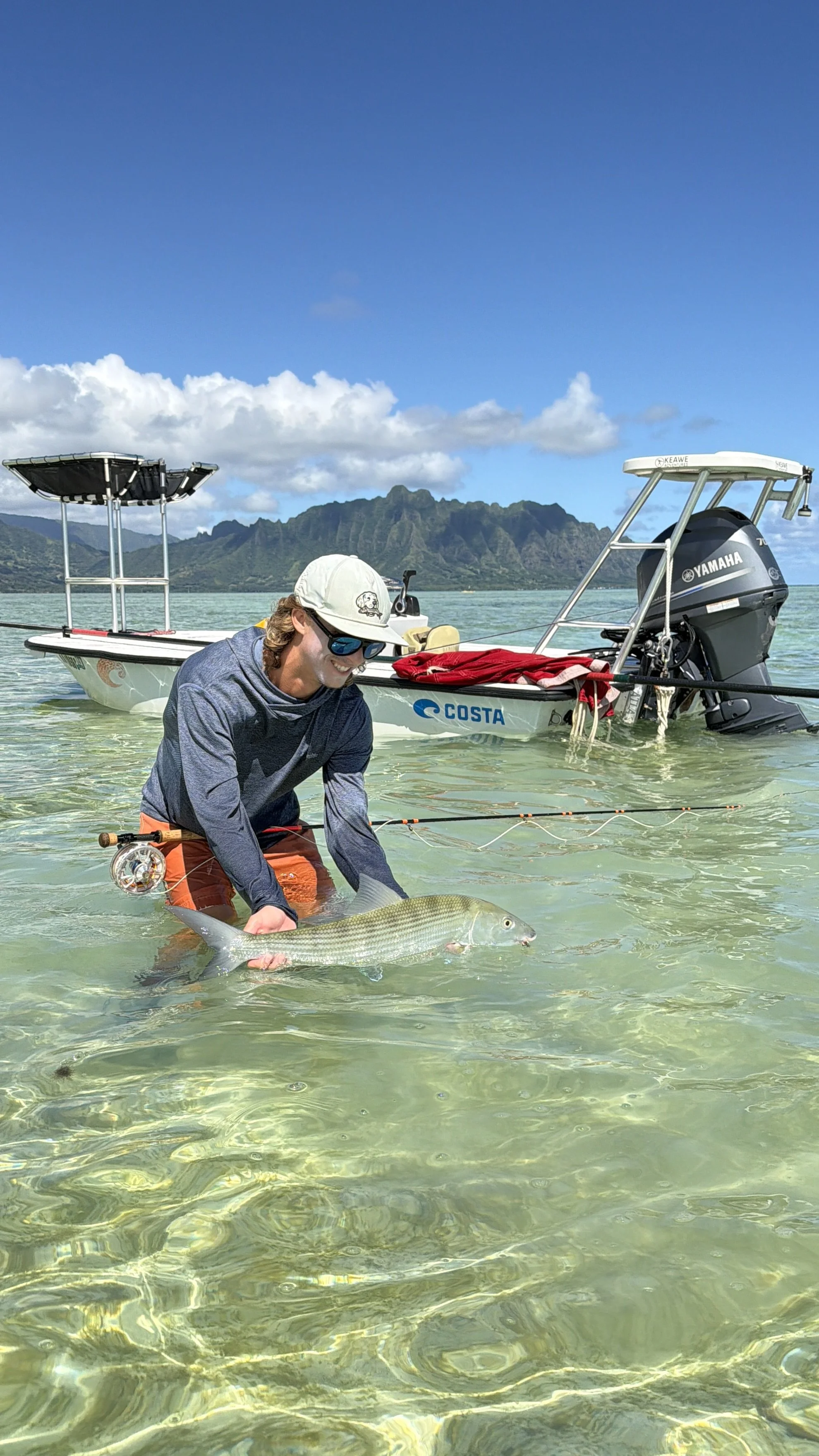
/The winds are cranking today. Whitecaps are forming across Kaneohe Bay on the island of Oahu. It’s going to be a wet ride from the marina at the Marine Corps Base to the flats. South Flat is the closest flat to the base, but the winds are strong—too strong to pole the flats effectively. The northeast trade winds are blowing harder than their usual 10–20 mph.
Today, we’ll have to use a custom-made sea anchor, also known as a drift chute or parachute anchor, to slow the boat’s drift. This will give us a little more time to line up our shots at bonefish. That extra time can make a huge difference between getting a good presentation and missing an opportunity altogether.
The sea anchor was custom-made for Coach Duff, one of the pioneers of the bonefish guiding industry in Hawaii. Recognizing the challenges of fishing in strong trade winds, Coach Duff hired a company that specialized in sewing sails for sailboats to manufacture a small parachute-style sea anchor designed specifically for his flats boat.
The chute was small enough to operate effectively in shallow water while creating sufficient resistance to slow the boat’s drift. This simple but innovative solution gave anglers more time to spot bonefish, line up their casts, and make accurate presentations before drifting past their targets.
As the boat drifts, the chute opens and fills with water, creating resistance that slows the boat’s movement. The stronger the wind, the more valuable this simple piece of equipment becomes.
Once deployed, the boat continues drifting with the wind, but at a much slower pace. This allows the guide and anglers to cover the flats without moving too quickly past potential fishing opportunities.
I usually choose a starting point that allows us to drift across the flat and intercept areas where I expect to find bonefish. The goal is to position the boat so the anglers have enough time to spot fish, prepare their casts, and make accurate presentations before the wind carries us past them.
It’s important to pay attention to the reef as we drift. The sea anchor can get caught on coral or other underwater structures, particularly in shallow water. When we approach a reef or an area where the chute might snag, I retrieve it and reposition the boat.
I hook the sea anchor to the poling platform, or sometimes to the side of the boat when fishing with two anglers. Its placement helps determine how the boat sits in the wind and how the anglers are positioned to cast.
Regardless of where the chute is attached, this innovation changed the way we fish the flats in strong winds. Coach Duff understood that controlling the boat’s drift was just as important as finding the fish. By slowing the boat and giving anglers more time to react, he significantly improved their chances of hooking bonefish.
What might seem like a simple piece of equipment became an important tool for fly fishing Hawaii’s flats. It allowed us to work with the trade winds rather than constantly fight against them.
And on days like today, when the whitecaps are rolling across Kaneohe Bay, that makes all the difference.