
Maui Fly Fishing
/Maui Fly Fishing
By Makani Christensen
November 4, 2026
Giant Hawaiian Bonefish
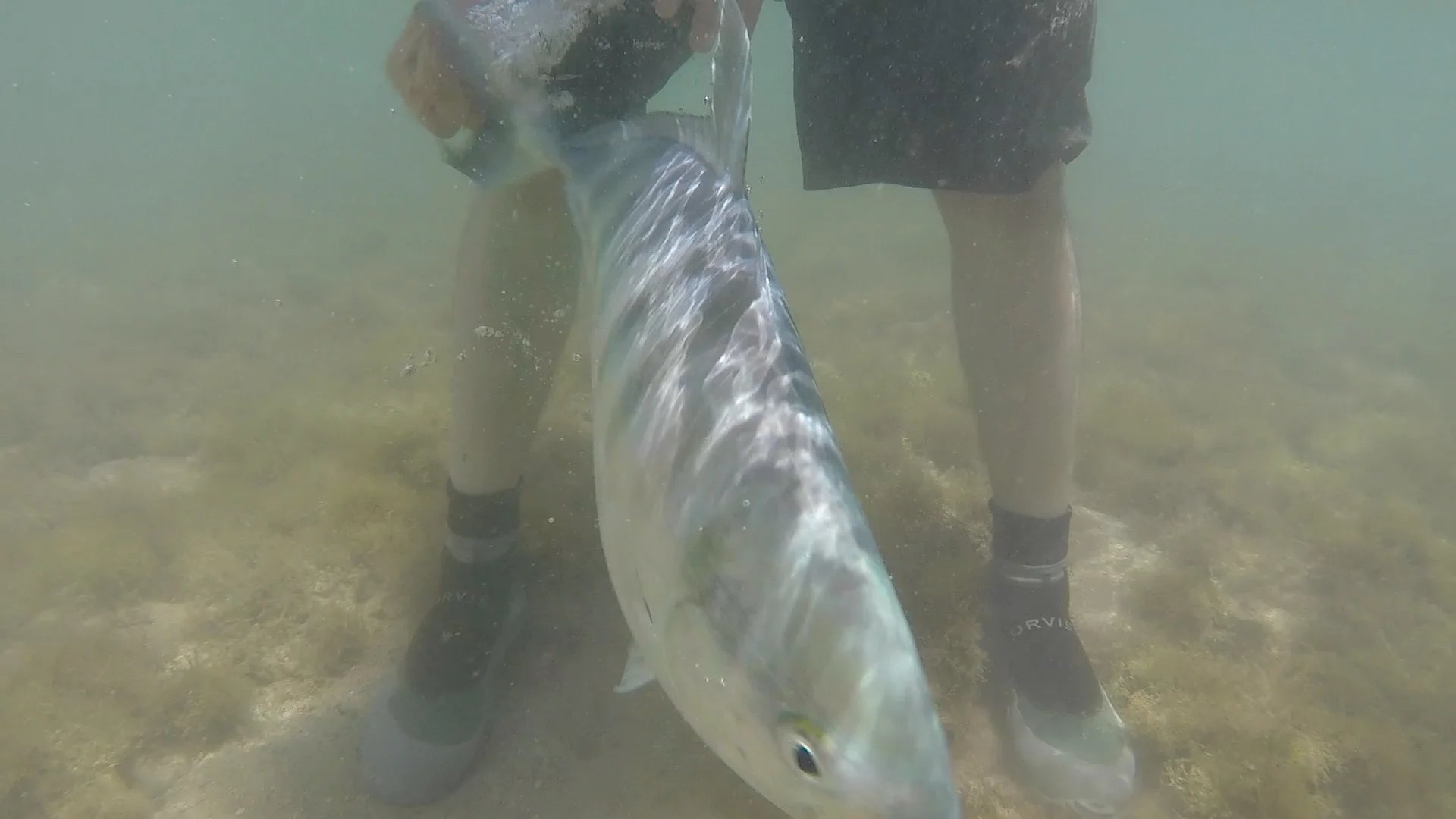
There are giant Hawaiian bonefish along the shores of Maui. In fact, the largest Hawaiian bonefish I’ve ever caught was on Maui. When I first hooked the fish, it didn’t look particularly big. However, once I brought it closer to shore, I realized I had caught something special.
I was fishing alone that day and saw four fish in total. The giant I hooked was less than a pole length away when it took the fly. I fished it all the way to the beach.
When I finally landed it, a surf instructor who was passing by offered to take a photograph. I got my picture with the bonefish, the largest I had caught to date.
Later, I inspected my leader and discovered that it was close to breaking. I was fortunate to have landed that fish. After taking the photograph, I released it and continued fishing.
Understanding Maui’s Flats
Maui is not a typical flats-fishing destination. In fact, its flats are nothing like those found on Oahu, Molokai, or Lanai.
Maui is one of Hawaii’s youngest islands, and its underwater terrain reflects that. The flats are generally deeper, and many areas drop off quickly toward the outer reef. Unlike the extensive shallow flats found on other Hawaiian islands, Maui has relatively limited areas where anglers can wade comfortably.
Some portions of the flats are accessible on foot, but many productive fishing areas are too deep to reach by wading alone. In certain locations, the water averages four to six feet deep before reaching the outer reef. There are only a handful of places where anglers can comfortably walk and fish during lower tides.
These conditions require a different approach to fly fishing.
On Maui, we have adapted our techniques to reach bonefish in deeper water. One of the most effective methods involves using ladders to gain elevation and improve visibility.
Standing above the water allows us to see fish that would otherwise be difficult to spot from the surface. This technique has become an important part of how we guide anglers on Maui.
My First Experience Guiding on Maui
The first time I guided on Maui was in 2010. Someone contacted me and asked whether I would fly over to guide them.
I agreed, even though I had never guided on Maui before. I had a general idea of where the fish might be, but I didn’t have firsthand experience fishing those particular flats.
When I arrived, I met my client at the beach. As we stood onshore, I noticed a bonefish cruising through the waves near the surf line.
We hurried out into the water, and within five minutes, we had hooked that fish.
This was before I owned a smartphone or had an Instagram account. Looking back, I still think about that experience and how quickly everything came together. I believe I was using my old flip phone at the time.
That first experience taught me something important: Maui’s bonefish can be found in places that many anglers would never think to look.
Maui’s Geography and Its Influence on Fishing
For those unfamiliar with Maui, it is the second-youngest of the main Hawaiian Islands.
Haleakala, rising approximately 10,023 feet above sea level, is one of Hawaii’s tallest mountains. It is considered an active volcano, although its last eruption occurred several hundred years ago.
Maui’s relatively young volcanic landscape helps explain why its underwater terrain differs from that of the older islands.
The surrounding waters become deep relatively quickly, and the shallow flats are not as extensive or developed as those found around Molokai, Lanai, and Oahu.
These geographical differences influence where bonefish travel, how they feed, and how we approach them.
Understanding the island’s terrain is essential to knowing where and when to fish.
Fishing the Higher Tides with Ladders
One of our guides on Maui, John John, once used a two-person kayak to access the fishing grounds.
Eventually, he stopped using the kayak and became one of the first guides in our operation to use a ladder for fly fishing.
The ladder provided an elevated platform that allowed him to see fish moving through deeper water. It also opened opportunities to fish during higher tides, when wading and spotting bonefish would otherwise be extremely difficult.
This technique changed the way we approached certain areas.
On many Hawaiian flats, anglers prefer lower tides because the fish are easier to see and the water is shallow enough to wade. Maui presents a different situation.
Because much of the surrounding water is deeper, an elevated position can make a tremendous difference. Instead of being restricted to shallow-water fishing, we can take advantage of higher tides and target bonefish moving across deeper portions of the flats.
The ladder doesn’t eliminate the challenges of fishing Maui, but it gives us another way to locate and pursue fish that might otherwise go unseen.
Tides and Fishing Conditions
Most of our fishing takes place during lower tides, particularly in areas where wading is possible.
However, there are times when the tides become too extreme to make guiding not worthwhile. Extremely high water can reduce visibility and make fish difficult to locate.
We also have to consider the wind.
Along Maui’s south shore near Kihei, we often fish until the early afternoon, when the winds begin to increase.
As the island heats up throughout the day, the prevailing northeast trade winds can interact with local terrain and produce stronger afternoon winds.
The winds travel through valleys and hit the mountains of West Maui, accelerating as they move across the landscape.
You can often see the wind developing as the day progresses. What begins as a relatively calm morning can turn into a challenging afternoon.
These conditions influence how long we can fish, where we position ourselves, and which areas offer the best opportunities.
Rain, Runoff, and Water Clarity
Rain can dramatically change the fishing conditions on Maui.
When heavy rain falls, runoff can turn portions of the flats brown, creating what we often call chocolate-colored water. Visibility can drop to nearly zero, making it extremely difficult to spot bonefish.
There have been times when certain fishing areas remained unfishable for weeks because of poor water clarity. On occasion, it has taken nearly two months for conditions to return to normal.
Strong storms can do more than temporarily reduce visibility. Heavy runoff and powerful waves can alter the shoreline and change the structure of the flats.
Sand can shift, channels can change, and areas that once held fish may look completely different after a major storm.
Large south swells can also shut down fishing.
When powerful waves break across the outer reef, they stir up sediment from the bottom and reduce underwater visibility. They can also make the water too rough or deep for safe and effective wading.
Even after the swell begins to subside, it may take time for the water to clear.
Sometimes we can find another area where the conditions are more favorable. However, the tides, wind, and waves all have to be within a manageable range.
There are days when our options become extremely limited. Instead of covering large stretches of water, we may have only one productive location where we can stand and wait for bonefish to swim within casting distance.
This is part of the reality of guiding on Maui.
Fly Fishing in the Waves
Because Maui has relatively few expansive, shallow flats, we often find ourselves fly fishing in the waves.
This creates a different set of challenges.
When using a swimming fly, the current and wave action constantly move the fly. The water can push it sideways, lift it off the bottom, or carry it away from the intended presentation.
A fly that looks natural in calm water may behave very differently when waves and currents are moving through the area.
The challenge is not simply getting the fly in front of a fish. It is keeping the fly in a position where the bonefish can see it and respond naturally.
There are fly that you leave in place, but these flies get hung up pretty quick in the waves. There is a time to use swimming flies and a time for flies that stay in place.
The Challenges and Rewards of Maui Bonefishing
Maui presents its own unique challenges for fly anglers.
The flats are deeper, access is limited, and the combination of tides, wind, waves, and runoff can make fishing unpredictable.
Knowing where to go is only part of the equation. Understanding when to fish a particular location is equally important.
A productive flat during one tide may be nearly impossible to fish during another. An area that offers excellent visibility in the morning may become unfishable when the afternoon winds increase.
Conditions can change quickly, and experience plays a major role in making the right decisions.
Despite these challenges, Maui offers the opportunity to encounter truly giant Hawaiian bonefish.
For me, that is what makes fishing here so rewarding.
Every island has its own characteristics, but Maui requires anglers to think differently, adapt their techniques, and work with the conditions rather than against them.
The fish are here, and some of them are enormous. The challenge is knowing when and where to find them—and being prepared when the opportunity finally presents itself.