When the diameter of the leader matters
/October 24, 2026
By Makani Christensen
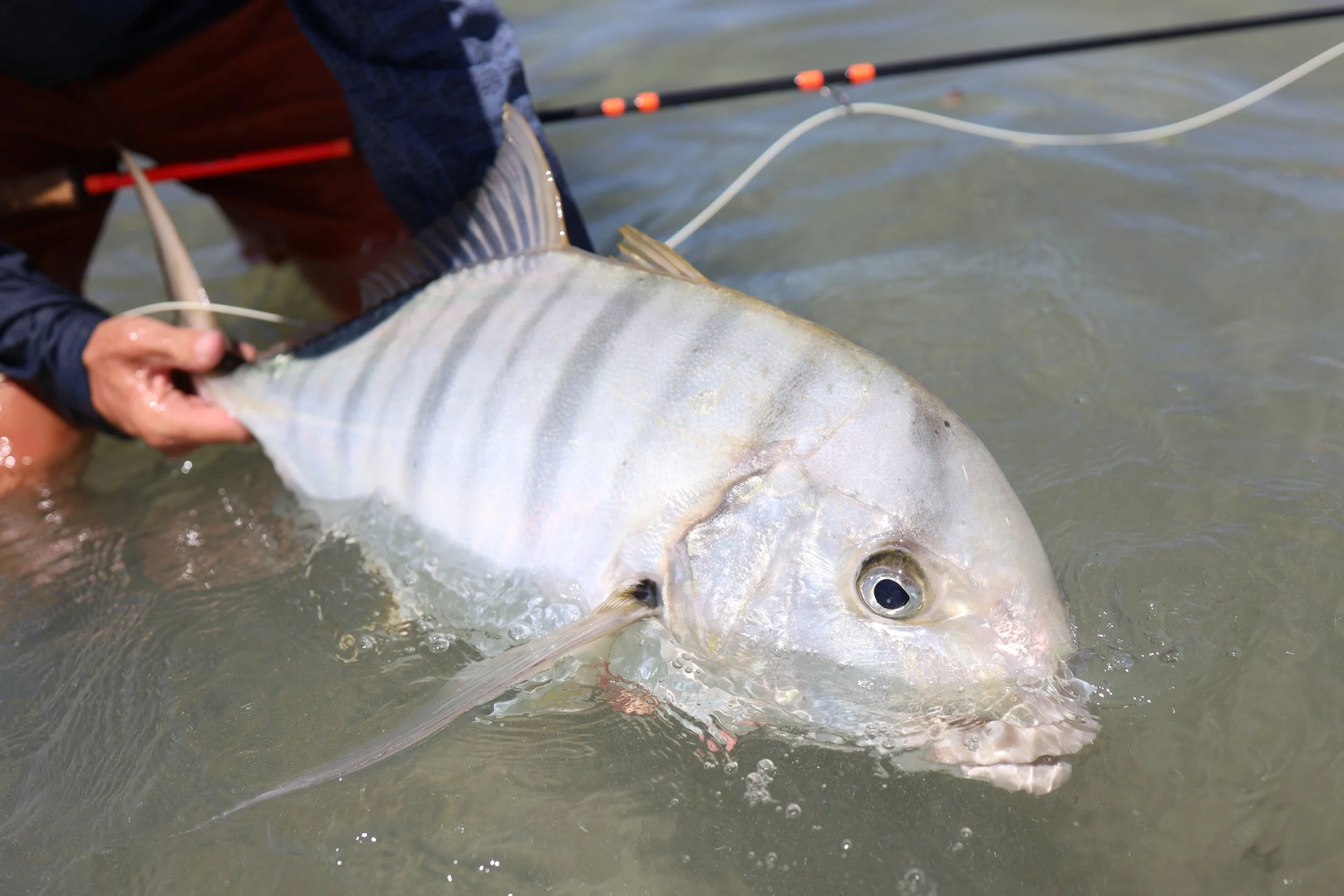
Bonefish don’t care about the diameter of your leader, provided your fly is presented correctly and the fish are willing to eat. What matters is how your leader affects the movement of your fly and your ability to fight the fish.
When we first started fishing for bonefish in Hawaii, we typically used spinning rods with bait cast onto the flats. I used 60-pound monofilament leaders with size 2/0 hooks. My leaders were approximately three feet long, allowing enough distance between the hook and the lead weight to minimize spooking fish when the lead bounced along the bottom.
Day or night, we caught plenty of bonefish using this setup. The heavy leader, oversized hook, and thick monofilament didn’t seem to matter. The bonefish were interested in only one thing: the squid.
The same principle applies to fly fishing, provided your leader doesn’t interfere with the way your fly swims. Your leader should be selected based on the fly you’re using, the fishing conditions, and the strength of your hook. If you’re pursuing a world record, line-class requirements become another consideration.
As a general rule, higher-pound-test monofilament has a larger diameter. The difference between 15-pound and 20-pound test may seem insignificant, but it can affect how your fly moves through the water. Depending on the fly, a thicker leader can influence its movement, sink rate, and overall presentation.
When I first started fly fishing for bonefish, I was convinced my fishing line was scaring them. Every time a fish refused my fly, I assumed my leader was too heavy. I experimented with smaller-diameter leaders, believing that lighter line would improve my success.
Looking back, the problem wasn’t my leader. It was my presentation.
My poorly placed casts were spooking the fish, and I didn’t yet understand how to properly present a fly on the flats.
Coach Duff, a pioneer in guiding for bonefish in Hawaii, explained this to me when I bought his boat. However, I didn’t fully appreciate his advice until I started catching bonefish regularly.
As my experience grew, so did the strength of my leaders. I began to understand the relationship between leader strength, hook strength, and the amount of pressure I could apply while fighting a fish.
A stronger leader allows you to apply more pressure, but that pressure must be balanced against the strength of your hook. Too much pressure can straighten the hook or tear it free from the fish’s mouth. Too little pressure gives the fish more opportunities to make long runs, reach coral, or break the line.
The more line a bonefish takes, the greater the chance of something going wrong.
Eventually, everything clicked. I learned how much pressure I could apply, how to control a powerful bonefish, and why matching my leader to my hook was more important than simply using the thinnest line possible.
The key is finding the right balance between leader diameter, fly presentation, hook strength, and fighting pressure.
Ultimately, catching Hawaiian bonefish consistently comes down to understanding fish behavior, making accurate casts, presenting your fly correctly, and knowing how to fight the fish once it’s hooked.
Don’t get so caught up worrying about leader diameter that you overlook what really matters.
The fish don’t care about your leader. They care about what’s on the end of it.